
Key Takeaways
- The heart of library work remains helping people find the information they need.
- While the core mission of connecting people with information remains consistent, a librarian’s day-to-day responsibilities shift depending on the setting.
- Modern libraries function as active community centers where librarians constantly engage with people, solve complex problems, and adapt to evolving situations.
- Strong communication skills prove essential for librarians since they have to explain complex concepts to people with varying technical knowledge and cultural backgrounds.
Many people assume librarians spend their days quietly reading behind circulation desks, getting paid to enjoy books all day. This widespread misconception reveals how little the public understands about modern library work.
Today’s librarians are skilled information professionals managing multiple complex responsibilities. They serve as educators, technology specialists, community organizers, and research experts. A single shift might involve helping college students locate scholarly sources, teaching seniors how to video chat with family, troubleshooting database access issues, and planning community programming.
The profession has evolved dramatically with digital transformation, but the core mission remains unchanged: connecting people with the information and resources they need to succeed. Whether you’re curious about what really happens during a librarian’s workday or considering this career path yourself, understanding these diverse responsibilities reveals why library science requires specialized education and professional expertise.
Key Responsibilities of Librarians
Librarians balance a wide range of responsibilities that combine public service, information management, and organizational leadership. Their work involves guiding patrons, curating collections, planning community programs, supporting technology use, and overseeing administrative tasks, highlighting the librarian’s role as both an information specialist and a community resource.
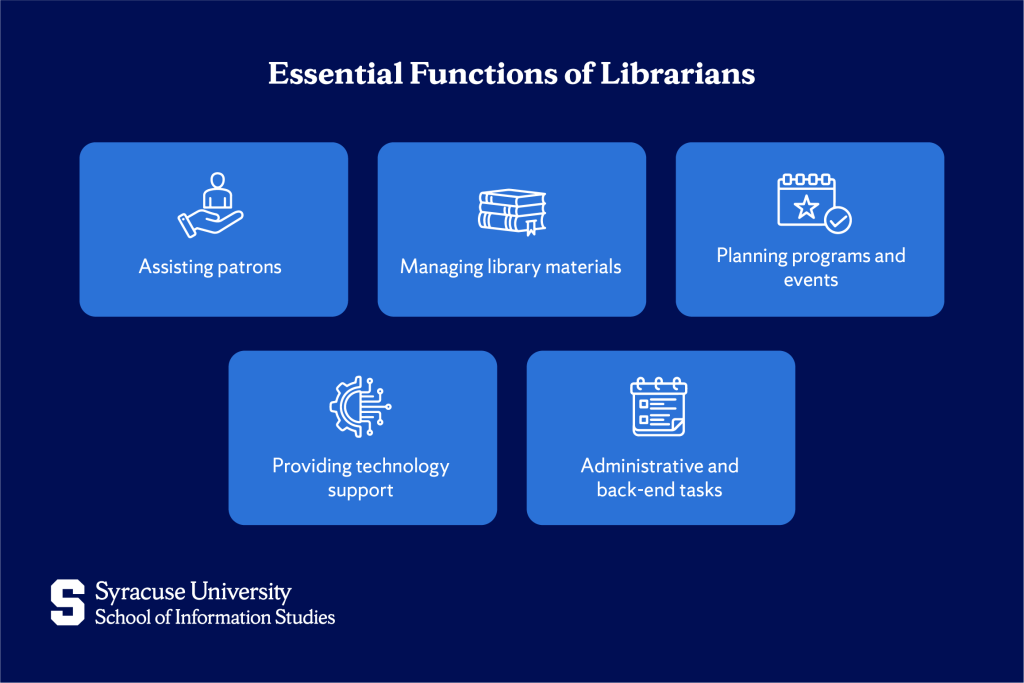
Assisting patrons
The heart of library work remains helping people find what they need. Librarians field questions ranging from simple directional inquiries to complex research projects requiring advanced database searches and source evaluation.
This assistance spans multiple communication channels. Librarians provide support at reference desks, through email correspondence, over phone consultations, and via virtual chat platforms. They guide users through catalog navigation, explain digital resource access procedures, and teach information literacy skills that develop critical evaluation abilities.
Managing library materials
Although automated systems now handle much of circulation processing, librarians remain central to overseeing and shaping collection management. They make strategic choices about acquiring new materials, evaluate and remove outdated resources, and organize collections to ensure easy accessibility.
This work requires applying information management principles to catalog new acquisitions, keep accurate database records, and ensure proper shelving organization. Many librarians also coordinate interlibrary loan services when patrons need materials unavailable locally.
Planning programs and events
Public libraries especially depend on programming to serve community needs. Librarians develop and execute diverse programming, including toddler storytimes, adult computer training, author presentations, book discussion groups, and practical workshops covering job searching and tax preparation.
Program development requires extensive planning, marketing coordination, and logistical management. Librarians research relevant topics, secure qualified presenters, promote events through multiple channels, prepare physical spaces, and handle registration processes. Popular offerings often include maker space activities, youth coding workshops, and digital literacy training for older adults.
Providing technology support
Technology assistance represents one of the most dramatically expanded aspects of modern library work. Librarians routinely help patrons with printing, scanning, public computer usage, Wi-Fi connectivity, and general device troubleshooting.
They also provide training on digital tools and database navigation. This might involve demonstrating e-book downloading procedures, guiding students through online research databases, or teaching job seekers electronic application processes. Many librarians work extensively with information systems that integrate multiple databases and digital platforms.
Administrative and back-end tasks
Behind public-facing services, librarians handle substantial administrative responsibilities. They manage email correspondence, participate in staff meetings, oversee departmental budgets, develop institutional policies, and coordinate with external organizations.
Professional development also requires significant time investment. Librarians attend conferences, complete continuing education requirements, and stay current with library science innovations. Collection development involves reviewing publisher catalogs, analyzing professional reviews, and studying usage statistics for informed purchasing decisions.
Other roles they take on
Most library job descriptions include “other duties as assigned” because librarians frequently handle unexpected responsibilities. They might clean up facility issues, mediate patron conflicts, provide basic first aid, or even provide informal support to individuals in distress.
Smaller libraries particularly require librarians to manage building maintenance concerns, coordinate social media presence, write grant proposals, and organize volunteer programs. This variety creates engaging work but demands flexibility and strong problem-solving capabilities.
How the Role Varies by Library Type
While the core mission of connecting people with information remains consistent, a librarian’s day-to-day responsibilities shift depending on the setting.
Public libraries
Public librarians emphasize community engagement while serving diverse patron demographics across all age groups. They organize extensive programming spanning children’s activities through senior services and frequently collaborate with social service agencies addressing community challenges.
These professionals regularly assist with practical applications, such as job searches, government form completion, and basic computer skill development. They also address frontline social issues, including homelessness, mental health support, and digital divide challenges affecting their communities.
Academic libraries
University librarians primarily support students and faculty through research assistance and instructional services. They teach information literacy courses, provide thesis and dissertation research support, and manage specialized collections across various academic disciplines.
Special libraries
Corporate, legal, medical, and other specialized libraries serve specific professional communities. These librarians often possess subject expertise within their fields and work with highly specialized resources and databases.
Prison librarians, hospital information specialists, and corporate research professionals each face unique challenges while serving distinct populations with specific information requirements. These positions often require pursuing a degree with concentrated focus areas.
Common Misconceptions About Librarians
The most persistent myth suggests librarians spend their workdays reading for pleasure. In reality, most reading involves policy documents, procedural manuals, professional literature, or research materials related to patron inquiries, not recreational content.
Another misconception portrays library work as quiet and predictable. Modern libraries function as active community centers where librarians constantly engage with people, solve complex problems, and adapt to evolving situations. The work demands strong communication abilities, technical competence, and emotional resilience.
Many people also underestimate educational requirements. Most professional librarian positions require a Master of Library and Information Science (MLIS) degree, representing substantial academic preparation in information organization, research methodology, and technology systems.
Rewards of the Job as a Librarian
The most rewarding aspect involves helping people discover answers, develop new capabilities, or access resources that enhance their lives. Whether assisting students with research breakthroughs or teaching technology skills that reconnect families, librarians witness daily evidence of their community impact.
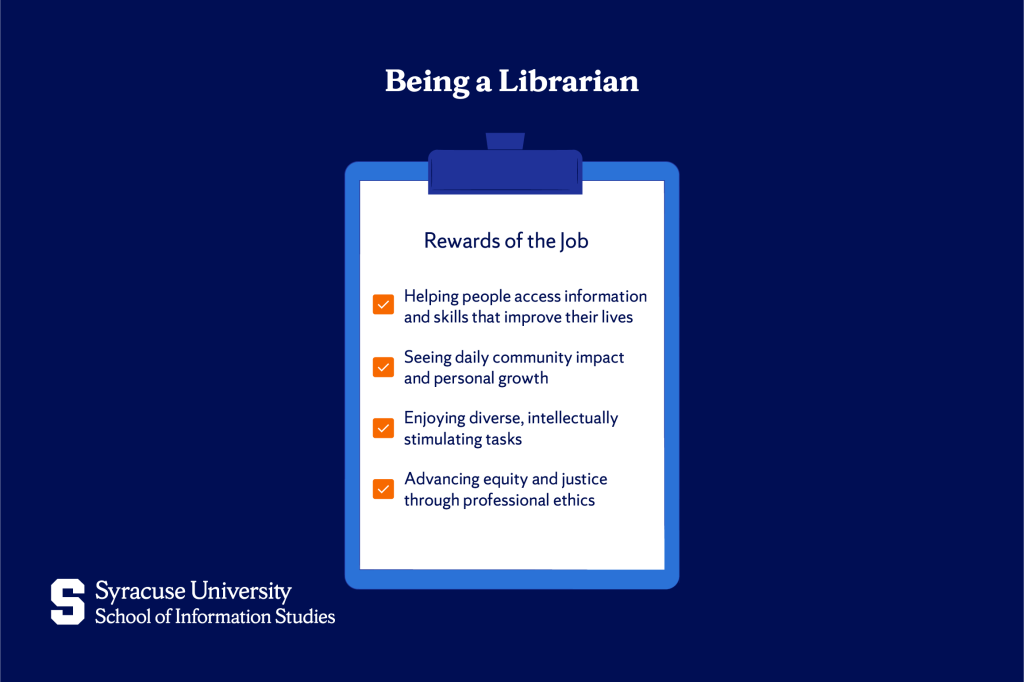
Many librarians appreciate the intellectual diversity their work provides. A single day might include genealogy research assistance, coding instruction, and collection development decisions. This constant learning opportunity keeps the profession intellectually stimulating.
The iSchool MSLIS program emphasizes this mission-driven focus, noting that graduates “advance information equity and justice by applying professional ethics, values, and standards to work towards a just and equitable information society.”
Is a Librarian Career Right for You?
Successful librarians typically demonstrate specific characteristics. Strong communication skills prove essential since you’ll explain complex concepts to people with varying technical knowledge and cultural backgrounds. Curiosity and learning enthusiasm help because you’ll constantly encounter new questions and subject areas.
Flexibility and problem-solving abilities remain crucial given daily task variety and unexpected situations. Technology comfort becomes increasingly important, though programming expertise isn’t required. Most importantly, you should genuinely enjoy helping people and believe in free information access principles.
If you’re considering this career direction, try volunteering at local libraries or shadowing practicing librarians for direct experience. You can also explore related undergraduate programs in information management that provide foundational knowledge for library
science graduate studies.
The Bottom Line
Librarians are information professionals who teach, guide technology use, design community programs, support research, and push back against misinformation.
While challenges, like budget constraints, exist, many librarians discover deep satisfaction in their community impact and the intellectual variety of their daily responsibilities.
For those who value learning, enjoy supporting others, and want to contribute to positive community change, library science could provide an ideal career path. Explore iSchool’s Library and Information Science Master’s degree for comprehensive preparation in modern library practice, or consider the Library and Information Science School Media Master’s degree if you’re interested in educational library settings.
Frequently Asked Questions (FAQs)
How many years of school does it take to be a librarian?
Most professional librarian positions require a Master of Library and Information Science (MLIS) degree, which typically takes 1-2 years after completing a bachelor’s degree.
What skills do you need to be a librarian?
Key skills include communication, research abilities, technology competence, organization, patience, and cultural sensitivity when working with diverse populations.
What is the difference between a librarian and a library technician?
Librarians typically hold master’s degrees and handle complex reference work, programming, and collection development, while library technicians often have associate degrees or certificates and focus on circulation and basic patron assistance.
Can you be a librarian without a degree?
Most professional librarian positions require an MLIS degree, though some small libraries may hire people with bachelor’s degrees for certain roles that don’t carry the official “librarian” title.
How much do librarians make?
Salaries vary significantly by location and library type, with academic and special librarians typically earning more than public librarians.