
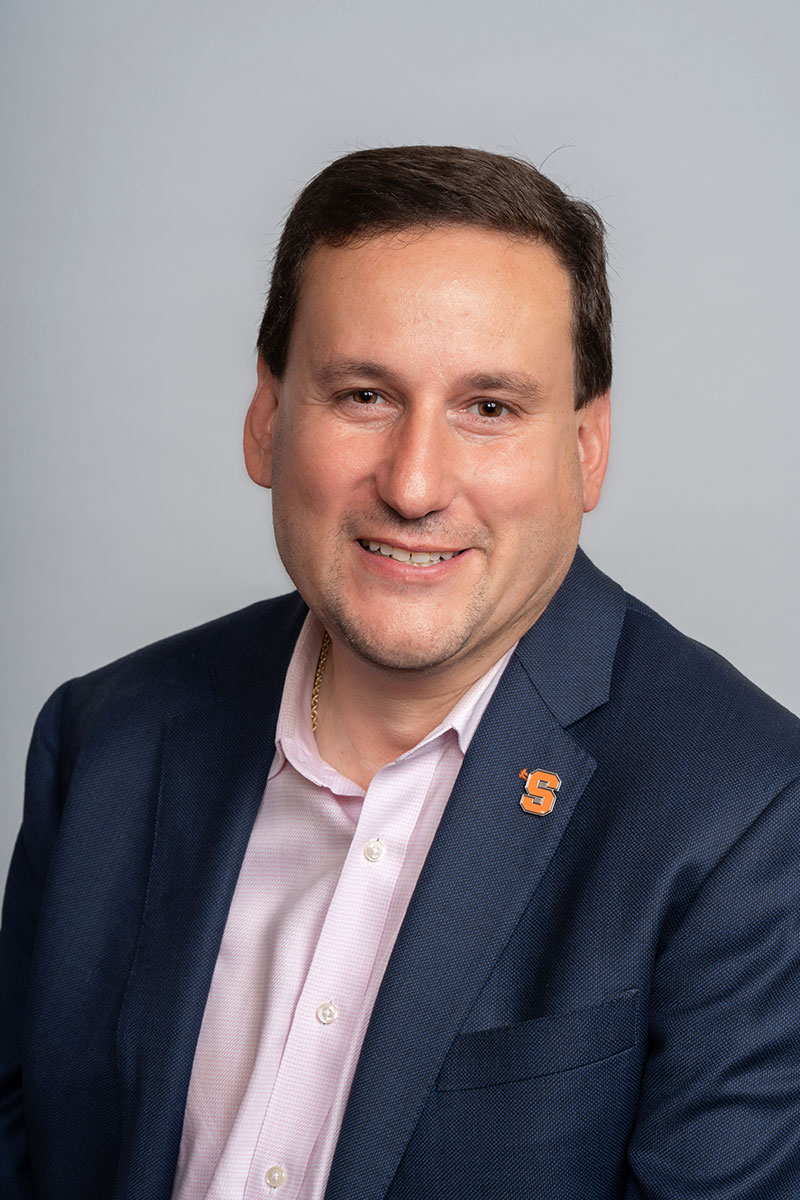
 Jeff Rubin ’95 on AI, Digital Transformation, and Syracuse’s Connected Future
But for Rubin, connectivity is only one layer of a larger equation. The next step is using data and AI to rethink how universities operate and how students learn. He believes artificial intelligence has the potential to reshape pedagogy in ways higher education has not experienced in centuries. Instead of relying solely on lectures and static assessments, Rubin envisions AI-powered simulations that adapt in real time to individual students’ skill levels and learning styles. “AI can do that,” he said, describing classroom experiences that function more like personalized, interactive problem-solving environments.
That vision helped guide Syracuse’s recent partnership with Anthropic, which provides Claude AI access to all faculty, staff, and students. Rubin emphasized that the goal is not just exposure to AI tools, but equitable access and meaningful integration into teaching and learning. “We’re taking AI seriously,” he said. “We may not have all the answers, but we are investing in this.”
Rubin also discussed the broader pressures facing higher education, including enrollment challenges, rising costs, and increasing skepticism around the value of a college degree. He sees AI as both a strategic opportunity and an operational tool, capable of improving efficiency while opening new possibilities for innovation and engagement. Rather than replacing people outright, Rubin believes AI will augment many roles and help organizations rethink repetitive processes, support systems, and decision-making structures.
That philosophy extends directly into the classroom. Rubin argued that AI literacy is quickly becoming a foundational life skill, comparable to writing, math, or communication. “There is not a person in this world who will go into a job or career that won’t be surrounded by information technology,” he said. He suggested universities should begin thinking seriously about how AI education can become embedded across disciplines, not isolated to technical programs alone.
The conversation also explored the university’s plans for undergraduate AI education, including proposed bachelor’s degree programs currently moving through the approval process. Rubin emphasized that organizations across every sector increasingly need professionals who understand how to strategically implement AI, manage data, and guide transformation efforts. Syracuse students, he believes, are well positioned to fill that need.
For Rubin, the future of higher education will depend on institutions that can evolve alongside technology while keeping people at the center of that transformation. Connectivity, data, AI, and human adaptability are no longer separate conversations. They are part of the same system, shaping how universities teach, operate, and prepare students for a rapidly changing world.