
Key Takeaways
- Data analytics offers strong earning potential, with salaries influenced heavily by experience, technical depth, and the complexity of the work. Senior analysts and seasoned professionals earn far above entry-level roles.
- Analysts in technology, finance, healthcare, retail, or consulting-linked roles often earn more because their work directly supports revenue, risk management, or mission-critical decisions.
- Mastery of SQL, Python, and visualization tools paired with strong communication, business understanding, and problem-solving ability consistently leads to higher AI analyst salaries and faster advancement.
Data analysts turn raw information into business insights, and companies across every primary sector are competing to hire them. The role of data analyst has become essential as organizations rely on data-driven decisions to stay competitive, optimize operations, and understand customer behavior.
If you’re considering this career or negotiating your next offer, understanding data analytics salary trends matters. Compensation varies significantly based on experience level, geographic location, industry, and technical expertise, all factors that can shift your earning potential by tens of thousands of dollars.
This guide breaks down what data analysts actually make in 2025, comparing entry-level to senior pay, highlighting location differences, and identifying the skills that command premium compensation.
What is the Average Data Analyst Salary in the US?
The average annual pay in data analytics in the United States is approximately $113,000. However, salary figures vary depending on the source and how roles are categorized.
Another dataset reports the average data analyst salary at around $85,000 per year, reflecting a broader range of positions that include less specialized roles and entry-level positions. This difference highlights how job titles and responsibilities can impact reported averages.
Most data analytics jobs fall between the 25th percentile at $91,500 and the 75th percentile at $129,000, while top earners (90th percentile) make $163,000 a year. Where you land in that range depends on your experience, skills, location, and the complexity of work you’re expected to handle.
Understanding these ranges helps you set realistic expectations and negotiate effectively based on what similar professionals in your situation are earning.
Data Analyst Salary by Experience Level
Salary progression in data analytics is tied directly to increased scope of work, seniority, and management responsibilities. As you move from cleaning data and building basic reports to leading projects and developing predictive models, compensation grows accordingly.
Entry-level data analysts typically start in the $60,000–$75,000 range, focusing on data cleaning, basic SQL queries, dashboard creation, and supporting senior team members. These roles require a portfolio demonstrating proficiency in specific tools like SQL, Tableau, and Excel, plus foundational knowledge of visualization for presenting insights clearly.
Mid-level analysts (3–5 years of experience) earn between $80,000 and $100,000. Responsibilities expand to include independent project ownership, advanced analysis, collaboration with stakeholders, and mentoring junior analysts.
Senior data analysts earn an average of $130,000 annually. At this level, you’re expected to design analytical frameworks, lead cross-functional initiatives, and translate complex findings into strategic recommendations.
Experienced analysts with 7+ years of experience enjoy compensation that rises well above senior-level pay. These professionals often manage teams, set analytical standards, and drive high-impact business decisions through advanced techniques like predictive modeling and statistical forecasting.
The shift from entry-level to senior roles reflects your ability to handle ambiguity, communicate insights to non-technical audiences, and deliver measurable business value through your work.
Salary Comparison by Related Data Roles
Specializing in related data careers, such as science or leadership, can significantly increase earning potential beyond the general data analyst role. Each path requires different skills and responsibilities, reflected in compensation differences.
Data analytics team lead positions average $123,000 per year. These roles combine technical expertise with people management, project coordination, and strategic planning.
Data scientists earn a median annual wage of approximately $123,000. This role demands deeper mathematical foundations, expertise in machine learning, and experience with predictive modeling and algorithm development.
Operations research analysts earn a median of $102,000 yearly. These professionals apply advanced analytical methods to help organizations solve complex operational problems and optimize decision-making.
Data Analyst Salary by Location
Geographical location and its corresponding cost of living are major drivers of salary variance. Cities with strong tech ecosystems, high demand for talent, and expensive housing markets typically offer higher compensation to offset living costs.
San Francisco, CA, leads with annual salaries that sit about 30% above the national average. The city’s concentration of tech companies, startups, and venture capital creates intense competition for analytical talent, driving salaries well above the national average.
Washington, DC, follow next. The region’s mix of government agencies, consulting firms, nonprofits, and private sector companies creates steady demand for analysts who can handle policy data, program evaluation, and regulatory reporting.
Other high-paying markets include New York City, Seattle, and Boston, where tech hubs and corporate headquarters concentrate opportunities. Remote work has expanded options, allowing some professionals to earn competitive salaries while living in lower-cost areas, though many employers adjust compensation based on location.
When evaluating offers, consider the full picture: salary, cost of living, quality of life, career growth opportunities, and whether remote flexibility is available.
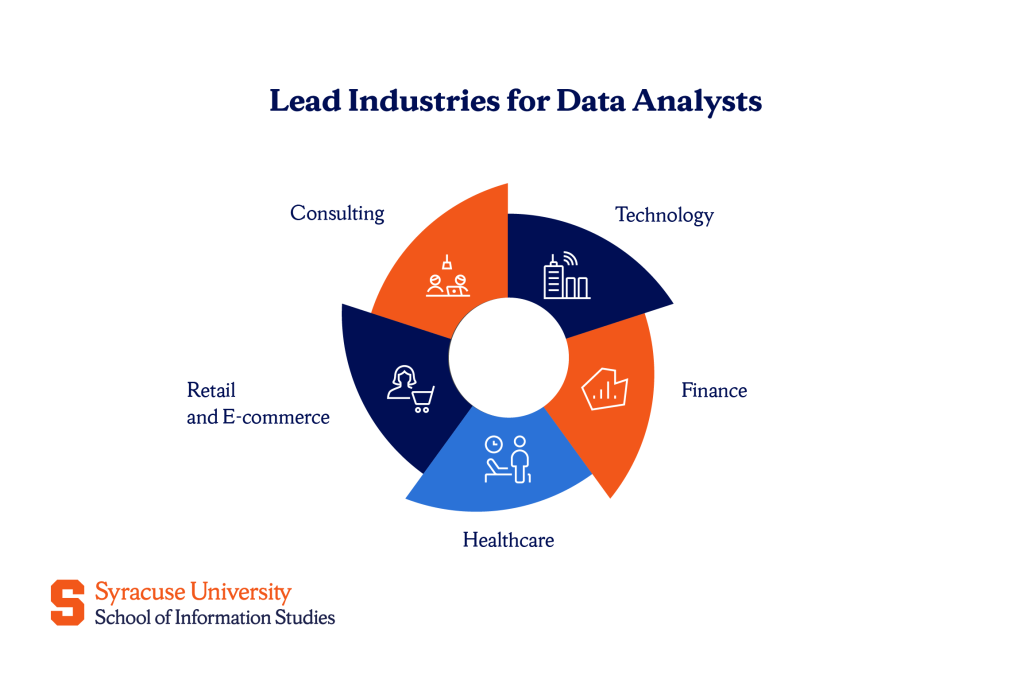
Top Industries for Data Analysts
Industries that rely heavily on complex, large-scale data generally offer premium compensation. Technology and finance lead, but demand spans healthcare, retail, consulting, and government.
Technology companies need analysts to optimize products, understand user behavior, improve algorithms, and support A/B testing for continuous improvement.
Finance organizations hire analysts to assess risk, detect fraud, model investment strategies, and ensure regulatory compliance. The combination of high-stakes decisions and massive datasets drives strong compensation.
Healthcare systems use analysts to improve patient outcomes, reduce costs, manage population health, and meet quality reporting requirements. Roles often require understanding clinical workflows and regulatory frameworks like HIPAA.
Retail and E-commerce rely on analysts to forecast demand, personalize recommendations, optimize pricing, and manage inventory. Companies compete aggressively for talent who can turn customer data into revenue growth.
Consulting firms hire analysts to serve diverse clients, often requiring adaptability, strong communication skills, and the ability to deliver insights under tight deadlines.
Industry choice affects not just salary but also the types of problems you’ll solve, the tools you’ll use, and the pace of work you’ll experience.
Key Skills That Increase Data Analyst Pay
Certain technical and professional skills consistently command higher compensation because they directly address business needs and are challenging to find in combination.
Core technical proficiencies:
- SQL: Essential for querying databases, joining datasets, and extracting insights from structured data
- Python: Enables automation, advanced analysis, statistical modeling, and integration with machine learning libraries
- R: Widely used for statistical analysis, visualization, and academic research applications
- Tableau: Industry-standard tool for creating interactive dashboards and visual storytelling
- Power BI: Microsoft’s analytics platform, common in enterprise environments
- Excel: Still critical for ad-hoc analysis, financial modeling, and stakeholder communication
Strong candidates demonstrate high-demand technical skills across multiple tools, not just proficiency in one. Employers value analysts who can adapt to different platforms and choose the right tool for each problem.
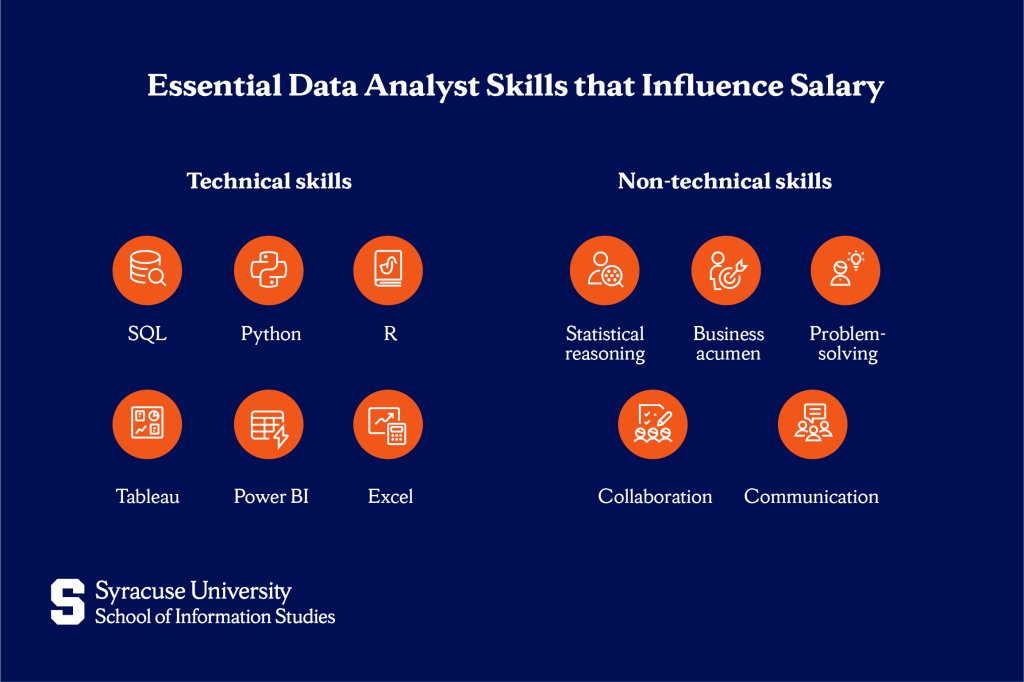
Essential non-technical skills:
- Communication: Translating complex findings into clear, actionable recommendations for non-technical audiences
- Statistical reasoning: Understanding when to apply different methods and how to interpret results accurately
- Business acumen: Connecting data insights to strategic goals, revenue drivers, and operational challenges
- Problem-solving: Framing ambiguous questions into structured analyses and knowing what questions to ask
- Collaboration: Working effectively with product managers, executives, and external stakeholders
The analysts who earn the most aren’t just technically skilled; they bridge the gap between data and decision-making, making them indispensable to their organizations.
Programs like Syracuse iSchool’s Applied Data Science Bachelor’s Degree emphasize both technical depth and professional skills, preparing graduates to deliver value from day one.
Wrapping Up
Data analytics salary varies widely based on experience, location, industry, and specialized skills, but the field consistently offers strong earning potential and career growth. Entry-level analysts can start around $70,000, while senior professionals and specialists often exceed $130,000.
The factors that drive higher compensation, such as technical proficiency, business acumen, leadership ability, and domain expertise, are all skills you can develop through education, practice, and strategic career moves. As demand for data-driven decision-making continues to grow across every sector, analysts who stay current with tools and methods will find consistent opportunities for advancement.
If you’re ready to build the skills employers are hiring for, Syracuse iSchool’s data analytics programs provide hands-on experience with industry-standard tools, mentorship from faculty with real-world expertise, and strong placement outcomes.
Start building your foundation today and position yourself for a career that combines intellectual challenge with meaningful compensation.
Frequently Asked Questions (FAQs)
Do data analysts get bonuses or stock options?
Yes. Many analysts receive annual bonuses (typically 5–15% of base salary) tied to performance, and those at tech companies often receive equity compensation.
What is the average hourly rate for freelance data analysts?
Freelance data analysts can charge between $25 and $200 per hour, depending on experience, specialization, and project complexity.
How does remote work affect data analyst salaries in 2025?
Many companies now offer remote roles at competitive salaries, though some adjust compensation based on the employee’s location and local cost of living.
Do Google or IBM Data Analytics certificates increase starting salary?
These data analytics certificates can help you get hired by demonstrating foundational skills, but employers prioritize portfolios with real projects and degree credentials when determining starting salary.