
Key Takeaways
- An MLS or MLIS is the standard degree for school librarians.
- Most library science programs require a practicum or internship in a school library setting.
- Strong organizational, communication, and technology skills set successful school librarians apart.
- 57% of school librarians say they’re responsible for teaching students how to use library technology, with 77% having it as a core part of their role.
Most people think school librarians only manage books, but that’s not all they do. These professionals teach information literacy and support curriculum development, while helping students become critical thinkers in a digital world. For those drawn to education, technology, and creating spaces where students can grow, this career offers a meaningful path forward.
Becoming a school librarian involves earning the right degrees, gaining certification, building practical experience, and continuing to grow professionally.
Educational Requirements to Become a School Librarian
Most school librarian positions require graduate-level education combined with certification or licensure. The specific requirements vary by state, but the foundation remains consistent: you need specialized training in both library science and education.
Degrees and coursework
A Master of Library Science (MLS) or Master of Library and Information Science (MLIS) is the standard degree for school librarians. Some programs offer specialized tracks in school library media that blend library science with educational theory and practice.
Your coursework will typically include:
- Cataloging and classification systems – Learning how to organize resources using systems like Dewey Decimal and Library of Congress classifications.
- Collection development – Understanding how to select, evaluate, and maintain age-appropriate materials.
- Information literacy instruction – Developing skills to teach students how to find, evaluate, and use information effectively.
- Educational technology – Mastering digital tools, databases, and library management systems.
- Youth services and literature – Studying children’s and young adult literature, developmental stages, and reading promotion strategies.
Programs accredited by the American Library Association (ALA) are widely recognized and meet most state requirements. According to the ALA, there are 62 ALA-accredited programs in library and information studies in the United States as of 2024.
Certification and licensing
After earning your degree, you’ll need state certification or licensure to work in public schools. Requirements vary significantly by state.
Most states require:
- A master’s degree in library science from an ALA-accredited program.
- Completion of a teacher certification program or education coursework.
- Passing scores on state exams (such as the Praxis School Librarian test).
- Background checks and fingerprinting.
Some states also require:
- Prior teaching experience (typically 1-3 years).
- Separate teaching certification before obtaining library certification.
- Continuing education credits for license renewal.
Check your state’s department of education website early in your planning process. Requirements can change, and knowing what’s needed helps you choose the right program and plan your timeline.
Developing Essential Skills
In addition to formal education, successful school librarians develop skills that help them connect with students, manage complex systems, and adapt to changing technology.
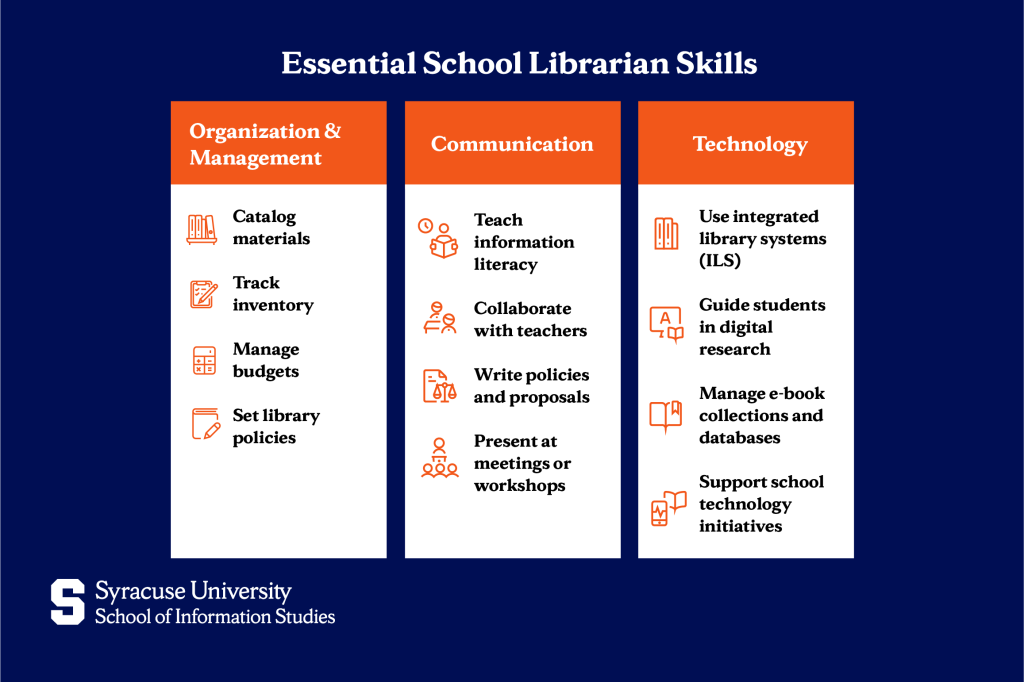
Organizational and management skills
School librarians oversee collections of thousands of items, manage budgets, coordinate schedules, and ensure that all library systems operate efficiently.
You’ll need to:
- Catalog and classify materials efficiently using automated library systems.
- Manage circulation and track inventory across print, digital, and multimedia formats.
- Budget strategically to balance collection needs with limited funding.
- Create policies for acceptable use, circulation, and resource access.
These skills directly impact how effectively students and teachers can use the library. A well-organized system means students find what they need quickly, and teachers can rely on the library to support lesson plans.
Communication and technology skills
School librarians work with everyone: students, teachers, administrators, and parents. You’ll teach information literacy lessons, collaborate on curriculum projects, and advocate for library resources.
Communication skills include:
- Teaching groups of students with diverse learning needs.
- Presenting at faculty meetings and professional development sessions.
- Writing clear policies, newsletters, and grant proposals.
- Collaborating with teachers to integrate library resources into lessons.
Technology skills are equally important:
- Using integrated library systems (ILS) like Follett Destiny or Alexandria.
- Teaching students to use databases, search engines, and digital research tools.
- Managing e-book collections and digital lending platforms.
- Supporting educational technology initiatives across the school.
According to a report by School Library Journal, 57% of school librarians say they’re responsible for teaching students how to use library technology, with 77% having it as a core part of their role.
Gaining Practical Experience
Classroom learning gives you the foundation, but hands-on experience in real school libraries builds the confidence and skills employers look for.
Student teaching and internships
Most library science programs require a practicum or internship in a school library setting. This supervised experience lets you apply what you’ve learned while working directly with students and teachers.
During your practicum, you might:
- Teach information literacy lessons to different grade levels.
- Assist with collection development and weeding out outdated materials.
- Help students with research projects and technology troubleshooting.
- Observe experienced librarians managing day-to-day operations.
Choose placements that expose you to different school types (elementary, middle, or high school) and diverse student populations. The more varied your experience, the better prepared you’ll be for different job opportunities.
Volunteering and part-time opportunities
If you’re not yet enrolled in a graduate program, volunteering or working part-time in libraries helps you explore the field and build relevant skills.
Consider:
- Library assistant positions.
- Many schools and public libraries hire assistants to help with circulation, shelving, and basic tech support.
- Volunteering at school or public libraries.
- Offer to help with reading programs, book fairs, or collection organization
- Tutoring or mentoring students.
- Build your teaching skills and understand how young people learn.
These experiences strengthen your graduate school applications and give you stories to share during job interviews.
Networking in the field
Building relationships with practicing school librarians opens doors to mentorship, job leads, and professional growth.
Ways to network:
- Attend state and national library conferences (like ALA Annual or AASL National Conference).
- Join local library associations and attend regional meetings.
- Participate in online communities (such as LM_NET, a listserv for school librarians).
- Connect with alumni from your graduate program working in school libraries.
Networking isn’t just about finding jobs; it’s about learning from experienced professionals who can answer questions, share resources, and guide you through career decisions.
Career Advancement and Professional Growth
Your career path doesn’t end once you land your first school librarian position. Ongoing professional development keeps your skills current and opens pathways to leadership and specialized roles.
Joining professional associations
Professional associations provide training, resources, advocacy, and community support throughout your career.
Key organizations include:
- American Library Association (ALA): The largest library association in the world, offering publications, conferences, and continuing education.
- American Association of School Librarians (AASL): A division of ALA focused specifically on school libraries, with standards, resources, and an annual conference.
- State library associations: Local chapters that provide regional networking, legislative advocacy, and professional development.
Membership benefits typically include access to journals, webinars, job boards, and discounted conference rates. Many employers will cover membership fees as part of professional development support.
Continuing education and certifications
Most states require continuing education credits to maintain certification, and additional training helps you stay ahead of changes in technology and pedagogy.
Professional development options:
- Workshops on new library technologies, makerspaces, or digital literacy.
- Courses in data privacy, copyright law, or collection diversity.
- Specialized certifications (such as Google Certified Educator or Microsoft Innovative Educator).
- Post-master’s certificates in areas like instructional design or educational leadership.
Continuing education also positions you for promotions and specialized roles. Employers value librarians who actively invest in their growth.
Leadership and specialized roles
Experienced school librarians can move into roles with greater responsibility and impact.
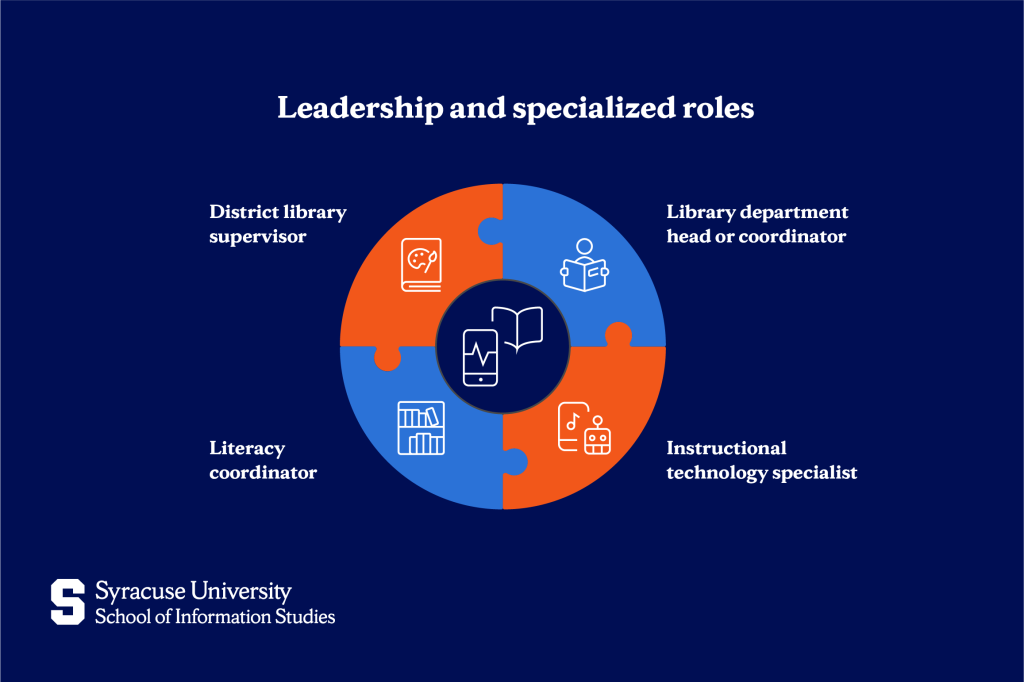
Career advancement paths include:
- Library department head or coordinator: Overseeing multiple school libraries within a district.
- Instructional technology specialist: Leading technology integration initiatives across schools.
- Literacy coordinator: Supporting reading programs and curriculum development district-wide.
- District library supervisor: Managing budgets, policies, and professional development for all school libraries in a district.
These positions typically require several years of experience, strong leadership skills, and sometimes additional credentials in educational administration.
Job Outlook and Salary Expectations
Understanding the job market and salary ranges helps you set realistic expectations and plan your career strategy.
Demand for school librarians
The demand for school librarians varies by region and funding priorities. While some districts face budget cuts that reduce library staffing, others recognize the value librarians bring to student achievement and digital literacy.
According to the U.S. Bureau of Labor Statistics (BLS), employment of librarians and library media specialists is projected to grow 2% from 2024 to 2034, with about 13,500 job openings projected each year. However, growth in school libraries specifically depends on state and local education funding.
States with strong school library programs, like Texas, New York, and Georgia, tend to have more consistent demand. Rural and underserved districts often struggle to fill positions, creating opportunities for new librarians willing to work in these areas.
Salary and benefits
School librarian salaries vary based on location, experience, education level, and district size.
Salary ranges (2025 data):
- National median salary: $47,000- $64,000 annually
- Experienced librarians: $74,000+ annually
- District coordinators or specialists: Up to $68,000 annually
Factors affecting salary:
- Geographic location – Librarians in urban and suburban districts typically earn more than those in rural areas.
- Cost of living – States like Washington, District of Columbia, and New York offer higher salaries but also higher living costs.
- Education and certification – Additional degrees or National Board Certification can increase earning potential.
- Experience – Salary schedules in most districts increase with years of service.
Beyond salary, school librarians typically receive benefits like:
- Health insurance and retirement plans.
- Summers off (for 10-month contracts).
- Professional development funding.
- Paid holidays and school breaks.
While school librarian salaries may not rival tech or corporate positions, the combination of competitive pay, benefits, job stability, and meaningful work makes this career rewarding for many.
The Bottom Line
Becoming a school librarian takes time, dedication, and the right preparation, but it’s a career that lets you shape how students learn, think, and grow. You’ll help young people become confident researchers and critical thinkers.
At Syracuse University’s iSchool, you can take that next step through the Library and Information Science: School Media Master’s Degree or the Online Master of Science in Library and Information Science: School Media. Both programs equip you with the tools, technological fluency, and educational insight to manage information effectively, support digital learning, and lead and innovate within today’s school libraries.
If you’re ready to start, explore iSchool’s accredited programs, connect with school librarians in your area, or volunteer at a local school library to see if this path feels right. The field needs passionate, skilled professionals who see libraries as more than collections of books; they’re about opening doors to knowledge, curiosity, and possibility.
Frequently Asked Questions (FAQs)
Do you need a master’s degree to become a school librarian?
Yes. Most states require a master’s degree in library science (MLS/MLIS) from an ALA-accredited program to work as a certified school librarian in public schools. Some states may have alternative pathways, but the master’s degree is the standard qualification.
Can you work as a school librarian without teaching experience?
It depends on your state. Some states require prior teaching experience (typically 1-3 years) before you can obtain school library certification. Others allow you to enter the field directly with a library science degree and teaching certification. Check your state’s specific requirements.