
Key Takeaways
- Data security protects information through confidentiality, integrity, and availability principles.
- Common threats include malware, phishing, insider risks, and data breaches.
- Encryption, access controls, and regular backups form the foundation of data protection.
- Both individuals and organizations share responsibility for maintaining data security.
Data breaches affect millions of people each year. They have real consequences, such as stolen identities, lost money, or personal information being exposed. As more of everyday life moves online, from work documents to financial records, keeping that information safe has become a top priority across personal and professional settings.
Data security is the field responsible for protecting information in these environments. Understanding what data security involves and how it functions also opens the door to questions about its growing importance and its potential as a career path.
What Is Data Security?
Data security is the field responsible for the practice of protecting digital and physical information from unauthorized access, corruption, or even theft throughout its entire lifecycle. It’s a field that brings together technology, policies, and everyday practices in order to make sure only the right people can access, change, or share data.
Data security revolves around three principles—often referred to as the CIA triad:
- Confidentiality: Only authorized users can access sensitive information
- Integrity: Data stays accurate and unchanged unless an authorized user updates it
- Availability: Legitimate users can access data when they need it
Think about your academic records for a moment. Confidentiality means only you and approved university staff can see your grades. Integrity ensures those grades can’t be altered without proper authorization. Availability means you can actually access those records when you’re applying for internships or graduate programs and not find the system mysteriously unavailable.
For organizations, data security covers everything from customer databases to intellectual property. For individuals, it protects login credentials, financial details, personal messages, and the digital trail you create every day.
Why Is Data Security Important?
Data breaches cost organizations an average of $4.4 million, according to IBM’s Cost of a Data Breach Report. But its impact is felt in more than just finances, especially for individuals and educational institutions.
When student records are exposed, the fallout doesn’t stop at inconvenience. Stolen academic credentials can be used to open credit accounts, file fraudulent tax returns, or access financial aid systems. For universities, a breach erodes trust and credibility—something Syracuse University actively works to build through information literacy programs that teach students how to handle information responsibly.
Businesses face similarly high stakes. Exposed customer data can trigger lawsuits, regulatory penalties, and lasting reputational damage. In healthcare, losing patient records can lead to HIPAA violations and, in some cases, criminal charges.
Data security matters so much because it:
- Protects personal identity: Social Security numbers, birthdates, and addresses can enable identity theft when exposed
- Prevents financial fraud: Stolen banking or credit card data leads to unauthorized transactions
- Maintains trust: Students, customers, and partners expect their information to remain private
- Ensures compliance: Laws like FERPA and GDPR require proper data protection
- Preserves academic integrity: Research data and intellectual property often represent years of work
Types of Data That Need Protection
Not all data carries the same level of risk, but any information that could cause harm if exposed deserves protection. Here’s what typically needs the most attention.
Personal data
Personal data includes names, email addresses, phone numbers, Social Security numbers, and login credentials. Cybercriminals target this information because it’s often the first step in identity theft or account takeovers.
A student’s email account is a good example. It often connects to financial aid portals, course registration systems, and library databases. Once that account is compromised, the damage can spread quickly.
Financial data
Bank account numbers, credit card details, payment histories, and investment records have immediate monetary value. When financial data is stolen, the result can be unauthorized purchases, emptied accounts, and long-term credit damage.
Students need to be especially careful when checking balances or shopping online over public Wi-Fi. Unencrypted connections make it much easier for attackers to intercept sensitive information.
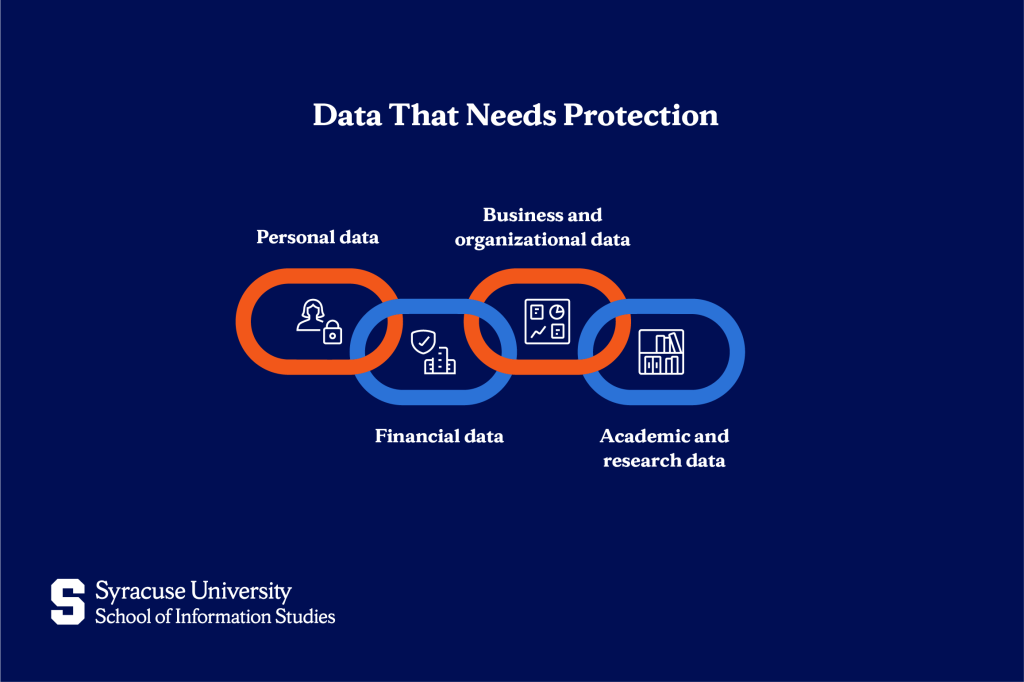
Business and organizational data
Organizations protect intellectual property, customer databases, employee records, and strategic plans. A breach can expose trade secrets, leak customer information, or reveal confidential strategies competitors would love to see.
For students planning careers in information systems or data-related fields, understanding how organizations manage these risks is essential. Security is always a balance between access and protection.
Academic and research data
Student records, grades, research datasets, and unpublished papers also require careful protection. When academic data is stolen or altered, it can compromise research integrity, violate privacy laws, or undermine years of scholarly work.
Universities invest heavily in securing learning management systems, grade databases, and research repositories. Students play a role too, especially by using strong passwords and following proper data-handling practices.
Common Data Security Threats
Understanding common data security threats makes it easier to notice when something feels off and to avoid mistakes that can be expensive to fix later. Technology definitely plays a role here, but a lot of successful attacks still happen for very human reasons. People are busy, distracted, or just not expecting a threat to show up during an ordinary part of the day.
Malware and Ransomware
Malware is harmful software created to damage systems, steal information, or quietly monitor activity without the user realizing it. It often gets onto a device through infected downloads, unsafe websites, or email attachments that look harmless at first glance.
Ransomware is a specific type of malware that locks users out of their files or entire systems and then demands payment to restore access. These attacks can stop business operations cold, cut off access to important personal files, and lead to serious financial losses. Paying the ransom doesn’t always mean the data will be recovered.
Phishing and social engineering
Phishing attacks rely on deceptive messages to trick people into sharing sensitive information or taking actions that aren’t safe. These messages are often designed to look like they come from trusted sources, such as banks, employers, or familiar service providers.
Social engineering is the broader strategy behind phishing. Instead of breaking into systems directly, attackers focus on manipulating human behavior by creating urgency, fear, or a sense of trust. Sometimes, all it takes is one convincing email or message and a single click for an account or entire network to be compromised.
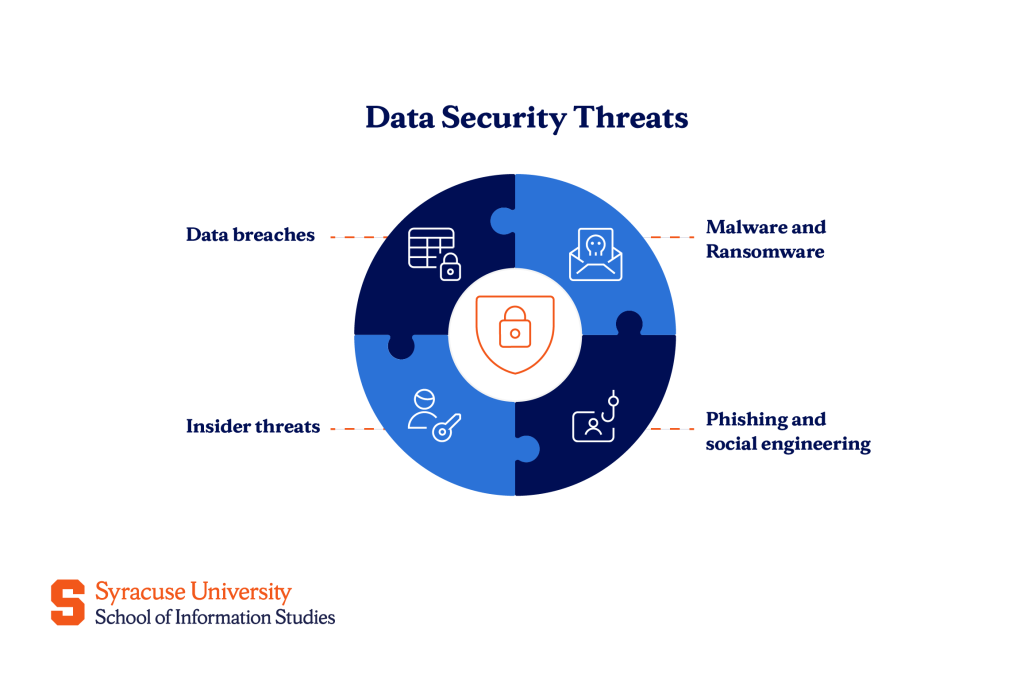
Insider threats
Insider threats come from people who already have legitimate access to systems, including employees, contractors, or partners. In some cases, this access is misused on purpose, but more often the damage comes from simple, unintentional mistakes.
Examples include sending sensitive information to the wrong person, choosing weak or reused passwords, or mishandling confidential data. Because insiders already have access, these incidents can be harder to detect and can take time and money to fully resolve.
Data breaches
A data breach happens when sensitive information is accessed, exposed, or stolen without authorization. Breaches can be caused by cyberattacks, human error, lost or stolen devices, or systems that were set up incorrectly.
The effects of a data breach often go well beyond immediate financial losses. Exposed personal information, damaged trust, regulatory penalties, and long-term harm to an organization’s reputation are common outcomes, and they can linger long after the initial incident is over.
Key Data Security Methods and Technologies
Effective data security works best in layers. No single tool does everything on its own, but when they’re used together, they create defenses that are hard to break through. That combination is what really matters.
Encryption
Encryption takes readable data and turns it into coded information that only authorized users can unlock. If someone intercepts encrypted data, what they see is essentially nonsense in the form of scrambled text with no clear meaning.
You run into encryption constantly, even if you don’t think about it much. HTTPS websites use it. Encrypted messaging apps rely on it. So do full-disk encryption on laptops and secure file storage systems. For students working with sensitive research, encrypted tools are especially important, even if they add an extra step or two along the way. It’s one of those trade-offs that’s worth it.
Access control and authentication
Access control is about deciding who gets to see or change data. A simple way to think about it is different keys for different rooms; some doors open for everyone, others only for a few people.
Common approaches include passwords, multi-factor authentication (MFA), biometric authentication, and role-based access. MFA stands out because it adds a strong layer of protection by requiring more than just a password, which is often the weakest link.
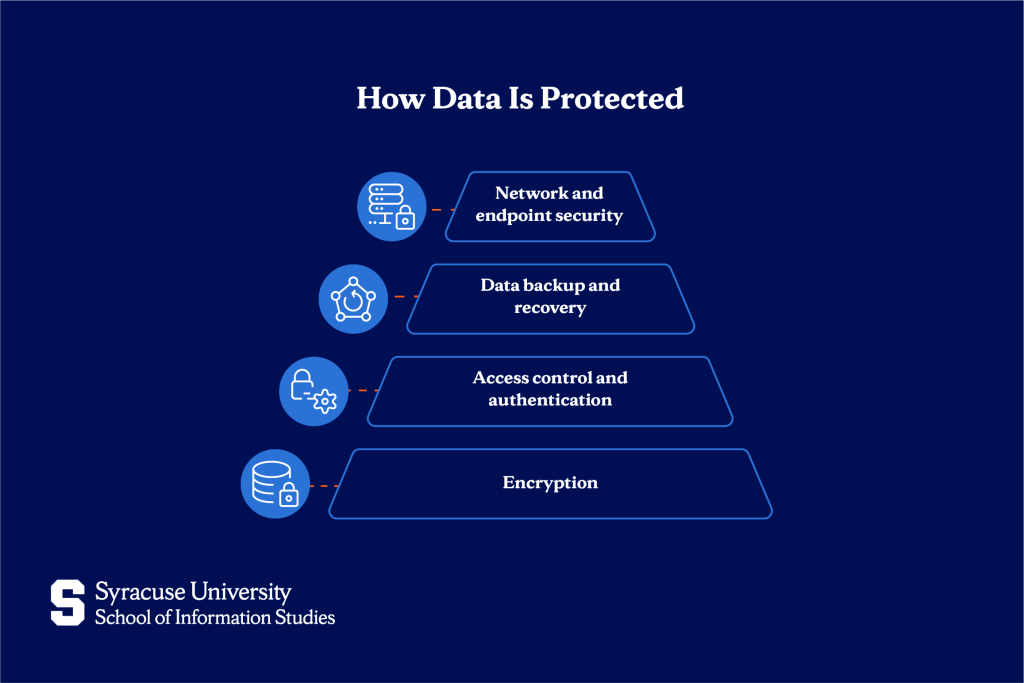
Data backup and recovery
Backups are exactly what they sound like: copies of data stored somewhere other than the original location. When ransomware hits, or hardware fails, backups make it possible to recover data without paying attackers or losing months of work.
The 3-2-1 rule is a common guideline here. It calls for three copies of data, stored on two different types of media, with one copy kept off-site.
Network and endpoint security
Network security protects the connections between devices, while endpoint security focuses on the devices themselves. Firewalls, antivirus software, VPNs, and regular system updates all play a role in keeping those environments safe.
Using public Wi-Fi without a VPN is a common risk. Data can be exposed more easily than people realize. Students working from coffee shops or libraries should always use their university’s VPN when accessing academic systems—it’s a simple habit that closes off a lot of unnecessary risk.
Data Security Best Practices
Technology only works when people use it correctly. Among the data security practices that make a real difference are to:
- Use long, unique passwords for each account
- Turn on multi-factor authentication whenever it’s available
- Keep devices and software up to date
- Store sensitive files in secure, encrypted locations
- Be cautious with emails, links, and attachments
- Take security awareness training seriously
- Review account activity and statements regularly
- Share personal information carefully, especially online
Data Security vs Data Privacy: What’s the Difference?
Data security and data privacy are closely related, but they address different concerns. Data security is about protecting information from unauthorized access. It covers the tools, technologies, and safeguards that keep outsiders from breaking into systems or stealing data in the first place.
Data privacy looks at what happens after data is collected. It focuses on how information is used, who is allowed to see it, why they have access, and how that data may be shared. It’s less about the lock on the door and more about what people do once they’re inside.
Who Is Responsible for Data Security?
Data security is a shared responsibility. It involves individuals, organizations, and governments all doing their part to protect information. No single group can handle it alone, mainly because data is created, stored, and accessed at so many different levels, often at the same time.
Organizations carry a lot of that responsibility. They design and maintain secure systems, set internal policies, and invest in tools meant to protect sensitive information. IT and security teams handle the day-to-day work—maintaining infrastructure, monitoring for threats, managing access controls, and responding when something goes wrong. Still, even the best technology has limits. Tools can reduce risk, but they can’t eliminate it entirely.
Employees, students, and everyday users matter just as much. In fact, many security incidents start with simple human actions—clicking a malicious link, reusing weak passwords, or mishandling sensitive data. Following basic security guidelines, staying aware of common threats, and using digital tools carefully can make a real difference. Small habits add up.
Governments also play a role by creating laws, regulations, and standards that require organizations to protect personal data and respond responsibly when breaches occur. These rules help establish expectations and accountability across industries, setting a baseline for how data should be handled.
Ultimately, data security comes down to personal responsibility in everyday digital life. Simple choices, like protecting passwords, double-checking messages, or thinking before sharing information, may seem minor, but they play a significant role in keeping data safe.
Securing Data in a Digital-First World
As more of daily life takes place online, staying safe in the digital world has become a shared priority. Protecting personal information, financial data, and sensitive systems is a concern that individuals and entire industries share. Data security is the one that helps make sure that digital environments are safe.
For some, this responsibility extends beyond personal habits into a professional calling. Working in data security means helping others protect what matters most, anticipating risks before they escalate, and building systems people can rely on. Preparing for this kind of role requires structured education that blends technical knowledge with real-world application.
At Syracuse University, the Master’s Degree in Information Systems is designed to provide a strong foundation for those interested in working with information in responsible and impactful ways. The program offers structured preparation for navigating the realities of today’s digital environments, where protecting data and understanding how systems function are increasingly central to professional work.
For all those interested in turning concern for digital safety into a career, Syracuse iSchool can be the place to develop the knowledge and skills needed to create a safer digital future.
Frequently Asked Questions (FAQs)
Is data security only important for large companies?
No. While large companies face high-profile breaches, individuals and small organizations are often easier targets. Criminals assume smaller entities have weaker security, making everyone a potential victim. Students should protect their data as carefully as businesses protect theirs.
Can data security be fully guaranteed?
No security system is 100% guaranteed. However, layered security measures make successful attacks extremely difficult. The goal isn’t perfect security (which doesn’t exist) but rather reasonable, risk-appropriate protection that makes you a harder target than alternatives.
What skills are needed for a career in data security?
Data security professionals need technical skills (networking, encryption, system administration) and soft skills (communication, problem-solving, ethical judgment). Understanding programming, database management, and security frameworks provides a strong foundation. Most importantly, you need curiosity and commitment to continuous learning as threats evolve.
How often should data security policies be updated?
Organizations should review security policies at least annually, and immediately following major incidents, technology changes, or regulatory updates. Regular reviews ensure policies remain relevant and effective as threats and technologies evolve.
Is data security more about technology or human behavior?
Both matter equally. The best security technologies fail when people reuse passwords, click phishing links, or skip updates. Conversely, security-conscious behavior only goes so far without proper technical safeguards. Effective data security requires the right tools and the knowledge to use them properly.