
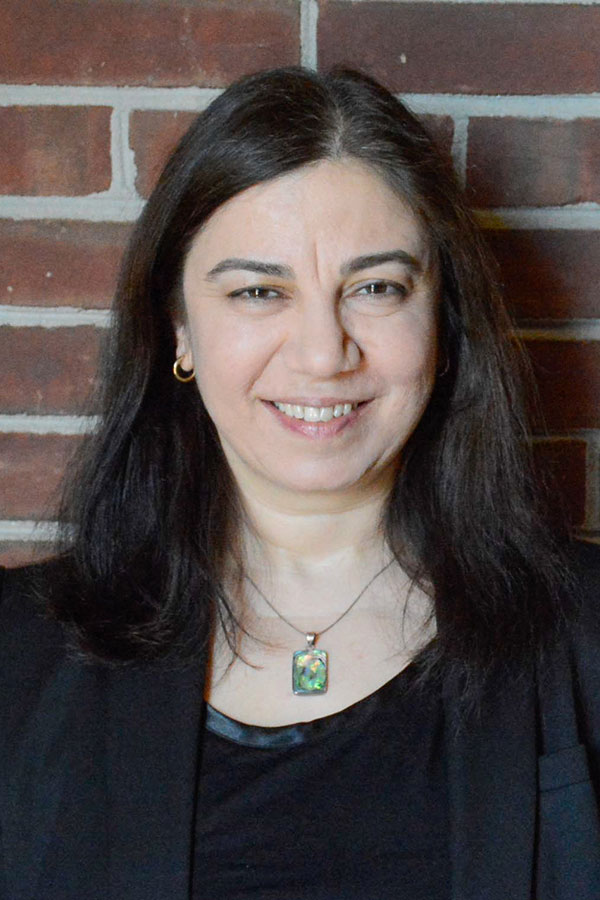
 A Syracuse University–City of Syracuse research partnership has been selected for the 2026 INRIX x MetroLab Challenge, a national program that provides university-city teams with access to proprietary transportation datasets to address pressing urban mobility questions. The project is led by Sevgi Erdogan, associate professor in the School of Information Studies (iSchool) and director of the Smart Cities and Civic Technologies Research Center.
Erdogan’s project, “Monitoring and Assessing Impacts of Highway Removal Projects: Insights from Syracuse I-81 Viaduct Project,” is one of 13 projects nationwide selected through a competitive review process by INRIX, MetroLab and an external transportation and mobility expert. The annual challenge brings together university researchers, local governments and transportation practitioners to use real-world mobility data to address pressing transportation and urban mobility issues.
Working in partnership with the City of Syracuse, the research team will use the multi-billion-dollar I-81 Viaduct Project as a real-time case study to better understand what happens when a major urban highway viaduct is removed and the surrounding transportation network is fundamentally reshaped. The project will examine four interconnected areas: changes in travel behavior, equity impacts, transportation safety and environmental effects- questions that affect the daily lives of thousands of Syracuse residents navigating construction detours, changing routes, and evolving neighborhood conditions.
The original I-81 viaduct, completed in the 1960s, displaced residents of the 15th Ward, a historically Black neighborhood in the heart of the city. Today, the viaduct’s removal and replacement with a street-level Community Grid is one of the most significant urban highway transformations underway in the country. “The I-81 project creates a rare opportunity to study a major infrastructure transformation as it is happening,” Erdogan said. “By combining detailed mobility data with demographic and community information, we can better understand not only how traffic patterns change, but who experiences those changes and how cities can respond. This is exactly the kind of work our Smart Cities and Civic Technologies Research Center (SC&CT) was created to do: bringing together data science, civic partnerships, and community-centered research to help cities navigate complex infrastructure challenges.”
Using INRIX origin-destination, trip paths, speed, and traffic volume data, the research team will track how routes, travel times and trip patterns change across the Syracuse metropolitan area. A particular focus will be on whether construction-related detours, increased travel times and changes in access or safety disproportionately affect low-income and transit-dependent residents in historically disadvantaged communities.
The project will also examine where new vehicle, pedestrian and cyclist safety risks emerge as traffic shifts around construction zones, as well as changes in vehicle miles traveled and associated greenhouse gas emissions as data and time allows. The scale and pace of I-81 construction project timeline provides an especially valuable research environment, with multiple construction contracts simultaneously transforming bridges, streets, intersections and portions of the viaduct itself.
Erdogan is an associate professor in the iSchool and, by courtesy, in Civil and Environmental Engineering. She directs the Smart Cities and Civic Technologies Research Center, where she leads efforts in fostering interdisciplinary, evidence-based, human-centered research to help cities make better decisions.With a background spanning transportation engineering, urban planning, and decision science, her work focuses on informing policy and decision-making across the digital, built, social, and natural environments.
The research team includes the City of Syracuse as the project’s local government partner, with additional technical support from the Center for Advanced Transportation Technologies Laboratory at the University of Maryland. Syracuse University faculty, staff and students will also participate in the research.
Over the coming year, the team plans to translate its findings into actionable information for the City of Syracuse, including interim research briefs, a final report and recommendations. The project will also contribute to a broader research framework that other cities undertaking highway removal projects can adapt. Ultimately, the researchers hope Syracuse can serve as a national model for understanding the mobility and equity implications of large-scale urban infrastructure transformation.
As part of the Challenge, the Syracuse team will receive complimentary access to INRIX’s suite of proprietary transportation datasets and technical guidance from INRIX experts. Findings from the 2026 cohort will be shared with the broader transportation community, through presentations at leading conferences including the Transportation Research Board Annual Meeting in January 2027.
Read the INRIX announcement and see all 2026 challenge finalists