Integrative Artificial Intelligence
Bachelor’s Degree

Earn Your Bachelor’s Degree in AI

The Bachelor’s in Integrative Artificial Intelligence (IAI) at Syracuse University’s School of Information Studies brings together two sides of AI. On one side, you build a foundation in programming, mathematics, and AI systems. On the other hand, you examine how those systems operate in the real world through ethics, governance, and human-centered design.

As a student in this major, you complete a required minor in an applied domain such as analytics, business, communications, media, or policy. By the time you graduate, you will have developed technical competency alongside the ability to critically assess how AI shapes society, organizations, and human values.

Join us and become a leader in the next generation of responsible AI.

  • Interdisciplinary Curriculum
  • Ethics and Governance Built-In
  • Applied Minor Required
  • Faculty Across Schools
  • Hands-On Capstone
  • Careers Beyond Engineering
Program Info

Clock

Next term starts: 

Fall 2027

120

Total Credit Hours

Graduate

Program Duration:

4 years

Laptop

Program Delivery: 

Available on-campus

11

Courses

Globe

Job Placement Rate: 91%

 
Admissions Requirements

If you’re an incoming first-year student from a U.S. high school or a U.S. citizen or permanent resident studying abroad, please visit the Admission Requirements for First-Year Students to see the full requirements for application. 

For Early Decision applicants, ensure you submit the Early Decision Agreement through the Common or Coalition Application. Homeschool applicants should review specific requirements and contact the office by phone (315.443.3611) or email (orange@syr.edu) if needed.

Admission requirement for international students

Syracuse University has a rich and longstanding tradition of welcoming international students from all corners of the globe, fostering a dynamic, multicultural environment that enriches both the academic and social fabric of our campus. 

To be considered for admission to Syracuse University, international students are required to complete a list of admission steps, which include submitting all official academic credentials, proof of English language proficiency and more. 

Please visit International ​Undergraduate Requirements to learn more.

 
Scholarships & Awards

All undergraduate applicants are automatically considered for merit-based scholarships, awarded by the Admissions Committee based on academic achievement, regardless of financial need. These scholarships do not require repayment and are based on the following criteria:

  • Academic credentials
  • Performance on standardized tests
  • Class rank
  • Portfolio or audition results (if relevant)
  • Leadership, community and extracurricular involvement
  • Overall citizenship

In compliance with federal regulations, Syracuse University considers all financial aid resources when determining your eligibility for further assistance. Therefore, any scholarships or grants received from sources outside the university must be reported.

 
Transfer Options

Follow these steps to complete your application:

  • Complete the Application
  • Pay the $85 Application Fee
  • Submit Official Academic Transcripts to Syracuse University
  • Provide an Academic Recommendation
  • Meet English Proficiency Requirements
  • Submit the Visa/Financial Support Information Form
  • Complete the College Report Form
  • Check for Additional Materials required by your current institution
  • Review Visa and Immigration Information
 
How to Apply

The application process for the Bachelor’s Degree in Information Management and Technology program is quick and easy through the Common Application or Coalition Application (powered by Scoir) for both domestic and international students. 

  • Review Enrollment Options and Application Deadlines.
  • View Your Application Checklist 
  • Complete the Common Application or Coalition Application powered by Scoir and submit it to Syracuse University.
  • Check for Additional College-Specific Requirements
  • Submit Standardized Test Scores (If Applicable)
    • For students applying for Fall 2024, Spring 2025, Fall 2025, or Spring 2026, SAT/ACT scores are optional.
    • Students who choose to submit scores can provide either self-reported or official scores.
    • Self-Reporting Scores: You may enter your scores via the Common or Coalition Application. Be sure to report them exactly as you receive them.
    • Official Scores: If you decide to send official scores, use the following codes: 

SAT: 2823, ACT: 2968

If you have any questions or need assistance throughout the process, feel free to reach out; members of our team will be happy to assist you.

 
Tuition & Fees

The total cost of attendance for students living on campus in 2025-2026 is $92,128 including all tuition, fees, housing, food and transportation costs. Learn more and explore scholarships and financial aid opportunities and different cost options based on housing.


What Can You Do with a Bachelor’s Degree in AI?

A Bachelor’s in Integrative AI opens doors across technology, policy, business, media, and the social sector, giving you access to roles that connect technical capability with real-world application. You might work on how AI is used in public policy, contribute to responsible design in a healthcare organization, or apply AI research in media platforms used at scale. You may also support business leadership by clarifying what AI can realistically deliver and where its limits require oversight.

The Integrative AI program at Syracuse University’s iSchool prepares you for these roles by combining AI training with an applied minor. You learn how to work with AI systems and apply them within a specific field, so you can take on AI-adjacent roles that traditional computer science degrees don’t reach.

Career opportunities
  • AI policy analyst
  • AI product analyst
  • Responsible AI consultant
  • Data analyst, AI implementation
  • AI ethics and governance specialist
  • Digital media strategist
  • Business analyst, AI transformation
TOP 0
CAREERS IN TECH LISTED
BEST FOR JOB SATISFACTION
(Forbes)
Median Salary
For Tech Industry
Bureau of Labor Statistics
$0
0%
Average wage premium for
employees with AI skills
PwC AI Jobs Barometer

Find Your Community.

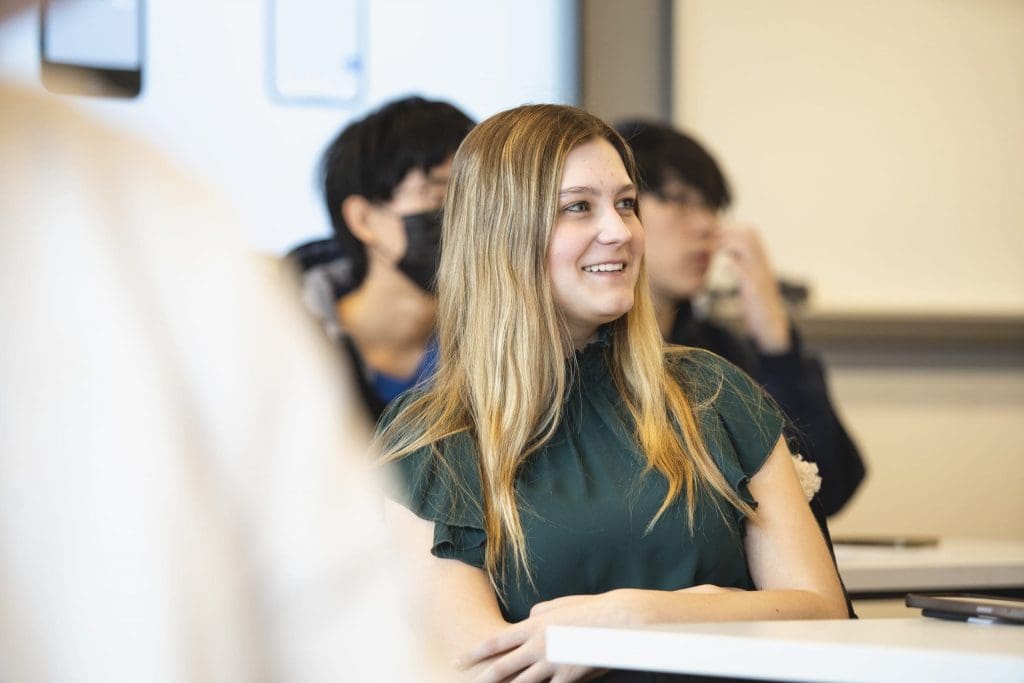
The iSchool is a collaborative, forward-thinking community that welcomes fresh ideas and values perspectives from every background and discipline. Students learn alongside peers from different fields and countries, creating a shared environment where ideas are shaped through discussion and collaboration.

Gain Experience.

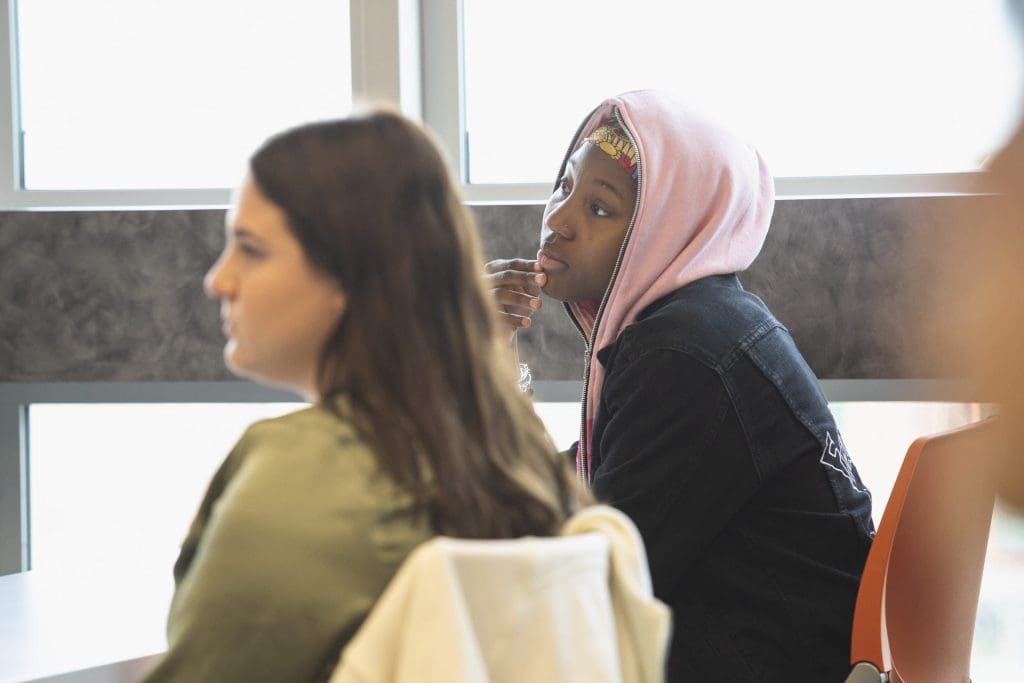
Many AI programs focus on theory, but here we take a hands-on, real-world approach through applied coursework and project-based work. Students analyze, design, and evaluate AI systems, then apply them within a chosen domain. The senior capstone brings this together in a full project, requiring students to develop, test, and apply an AI solution from start to finish.

Pursue Your Future.

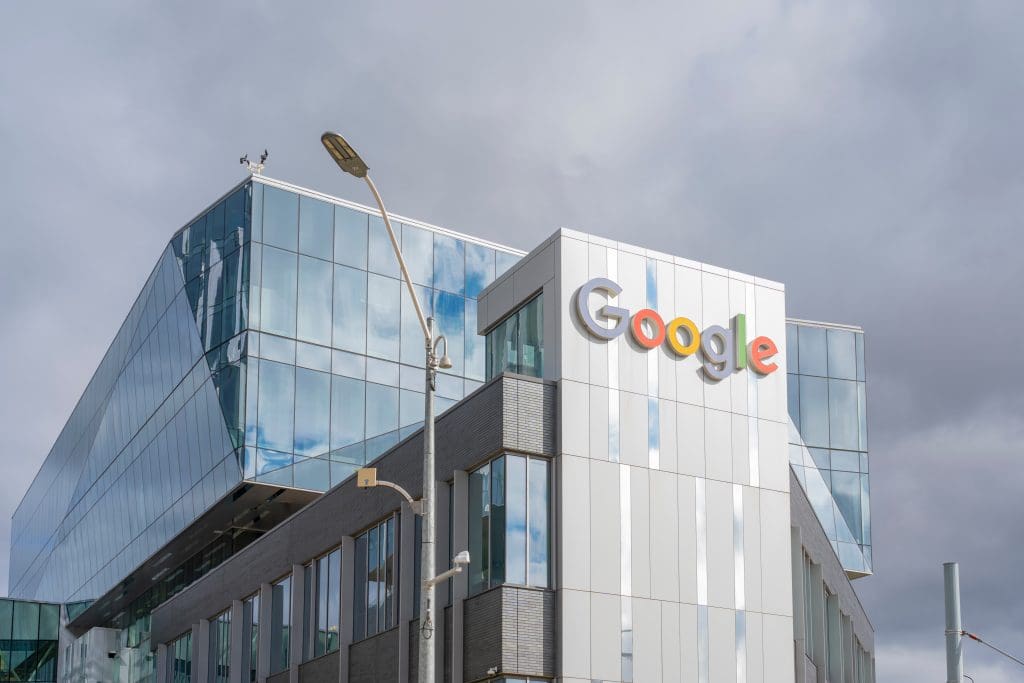
Our graduates achieve the highest job placement rates of any school at Syracuse University. Corporate partners and employers that sponsor programs at the iSchool, host student groups, and participate in career events include Google, Amazon, EY, AT&T, and Disney, where students connect with potential internship and full-time opportunities. The combination of technical AI skills, ethics training, and applied minor expertise is what distinguishes IAI graduates in these hiring contexts.

0
Average salary of
last year’s class
0%
We have the highest job placement
rate of any school at the university
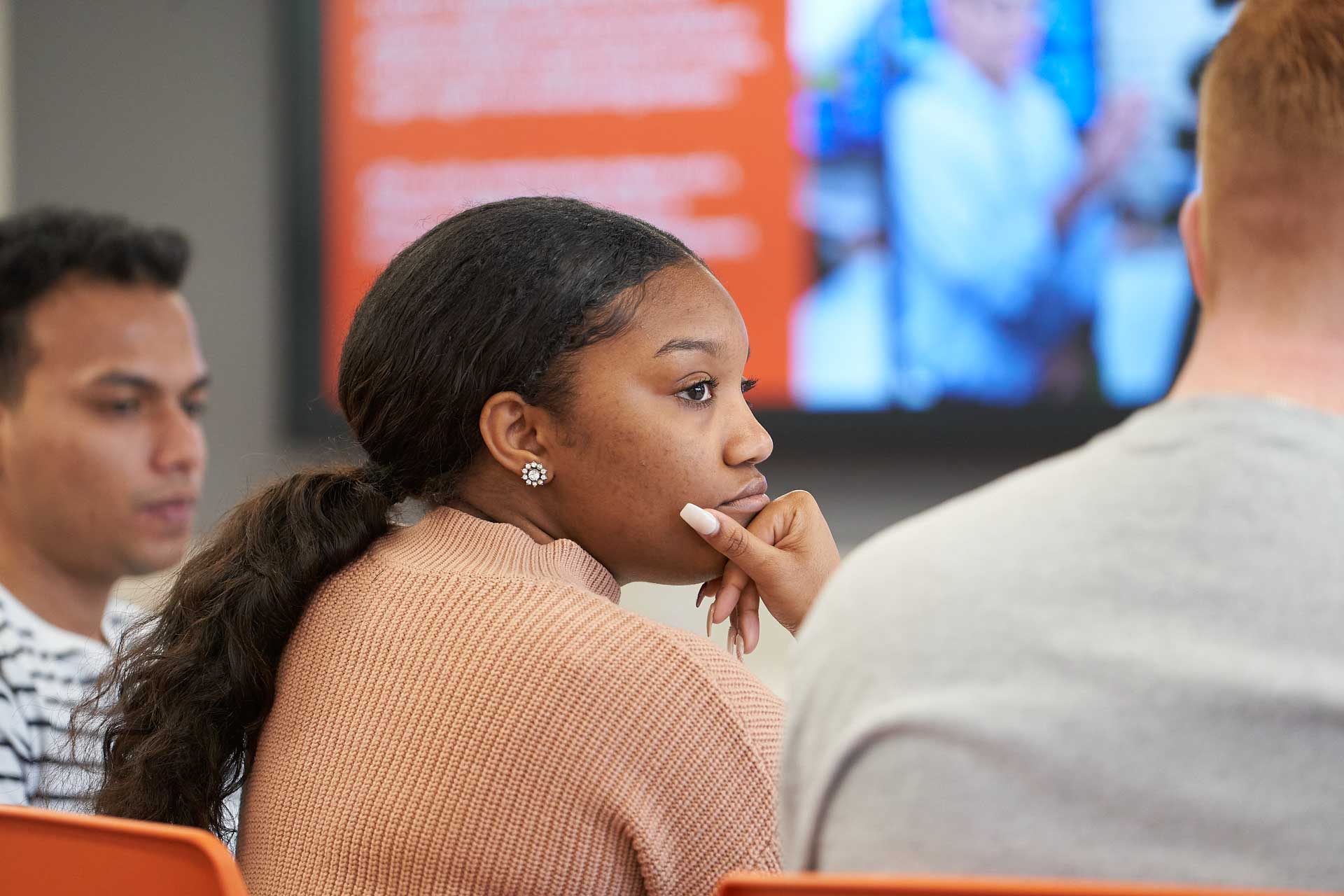
A student listens in

Courses & Curriculum

The B.S. in Integrative Artificial Intelligence is 120 credits. Students in this major will be required to complete a minor in an applied domain such as analytics, business, communications, media or policy. Students also have the opportunity to explore other disciplines with liberal arts requirements.

Integrative Artificial Intelligence Core: 4 credits

IST 101 | 1 CREDIT
Transition to life at the iSchool and Syracuse University, and become more familiar with the information field. Explore the range of possibilities that our undergraduate degree is designed to provide.

IAI 105 | 3 CREDITS

This introductory course explores the interdisciplinary field of artificial intelligence. Students develop AI literacy, examine technical and social dimensions, and analyze societal impacts. Through activities, case studies, and projects, they learn how AI functions, its limitations, and its influence across industries.

Technical Core: 9 credits

IAI 110 | 3 CREDITS

Introduction of Python programming for management of textual, tabular, and image data, used in conjunction with JSON, NumPy, Pandas, and LangChain for data management, cleaning, wrangling, aggregation, and interfacing.

IAI 302 | 3 CREDITS

Introductory concepts in set theory, probability theory, linear algebra, and the fundamentals of how they are applied to artificial intelligence. IAI302 cannot be taken for credit after receiving a grade of C or higher in ASE302, MAT331, MAT485, or CIS375.

IAI 309 | 3 CREDITS

Foundational concepts in artificial intelligence, including agents, knowledge representation and reasoning, machine learning, neural networks, reinforcement learning, and large language models, accompanied by programming projects and exercises.

Socio Core: 9 credits

IAI 320/IST320 – 3 CREDITS

This course provides a comprehensive understanding of Artificial Intelligence to students from different backgrounds and disciplines, including key concepts, techniques, and technical infrastructure, along with their social, environmental, economic, legal, and cultural context of emergence.

IAI 332/PSC332 – 3 CREDITS

This class uses a cross-disciplinary approach to study how tech companies, national governments, international organizations, and civil society groups could manage the development and deployment of AI in the public interest.

IAI 375/IST375 – 3 CREDITS

Understand, analyze, and critique scientific and practical perspectives on what counts as “interactivity” and “intelligence” when AI-driven agents interact with humans. Additional work required for graduate students.

Upper Level: 9 credits

IAI 391 – 3 CREDITS

Examines human-AI systems through individual behavior theories (rational choice, game theory, social choice) and dynamic system modeling approaches (agent-based models, complex systems, adaptive landscapes).

IAI 392 – 3 CREDITS

Designing AI interventions in sociotechnical systems and evaluating their effectiveness using experimental and quasi-experimental methods, from stakeholder analysis to impact measurement and recommendation formulation.

IAI 492 – 3 CREDITS

This one-semester capstone is the culminating experience for the Integrative AI major, where students synthesize technical and societal knowledge through a self-directed project — research paper, functional prototype, or portfolio — guided by faculty and presented to diverse audiences.

Required Minor: 18 credits

Students are required to complete one minor which typically consists of 6 courses, or 18 credits.  Students can select their minor from one of the following approved programs.  Courses applied toward a minor may not also be used to fulfill core curriculum requirements. Each course can only count toward one requirement.

College of Engineering and Computer Science: AI Science and Engineering

David B. Falk College of Sport: Sports Analytics

School of Information Studies: Applications of AI

Martin J. Whitman School of Management: Business

Maxwell School of Citizenship and Public Affairs: AI Policy

S.I. Newhouse School of Public Communications: AI and Emerging Media

College of Professional Studies: AI in Business Applications

University Wide Requirements

All incoming and transfer students are required to take a 3-credit IDEA course that can be selected from the approved IDEA Course Requirement list. Students are encouraged to choose an Arts & Sciences course from the IDEA course list so that it fulfills both the IDEA requirement and the Arts & Sciences requirement

Students are required to take 12 credits in communications skills, including IST 344.

Students are required to attain minimum competence in mathematics by completing the quantitative skills requirement of the Liberal Art Core curriculum of the College of Arts and Sciences.

Students are required to take three courses in each of the three divisions of the Arts and Sciences-Natural Sciences and Mathematics, Social Sciences, and Humanities. In addition, three courses in any of the divisions must be completed to fulfill this requirement.

Students are required to complete a minimum of 60 credits of coursework in the College of Arts & Sciences. Courses from Communication Skills, Quantitative Skills and A&S Divisional Requirements will all count towards the A&S minimum credit requirement. Additional A&S courses will be required to reach the 60 credit minimum requirement.

Students need 120 credits to graduate from Syracuse University.  If after meeting all program and University requirements, the student is still lacking to meet the 120 credits needed for graduation, students can take any undergraduate Syracuse University course to reach the graduation credits total.

Students will be required to complete one international experience to graduate with their iSchool undergraduate degree.

Student Success Stories
Meet Our Alumni

Graduates of the Integrative Artificial Intelligence program at Syracuse University School of Information Studies apply AI, strategy, communication, and problem-solving skills across industries ranging from technology and consulting to healthcare and finance.

Visit our Alumni & Friends page to discover more about their inspiring stories and connect with fellow alumni.

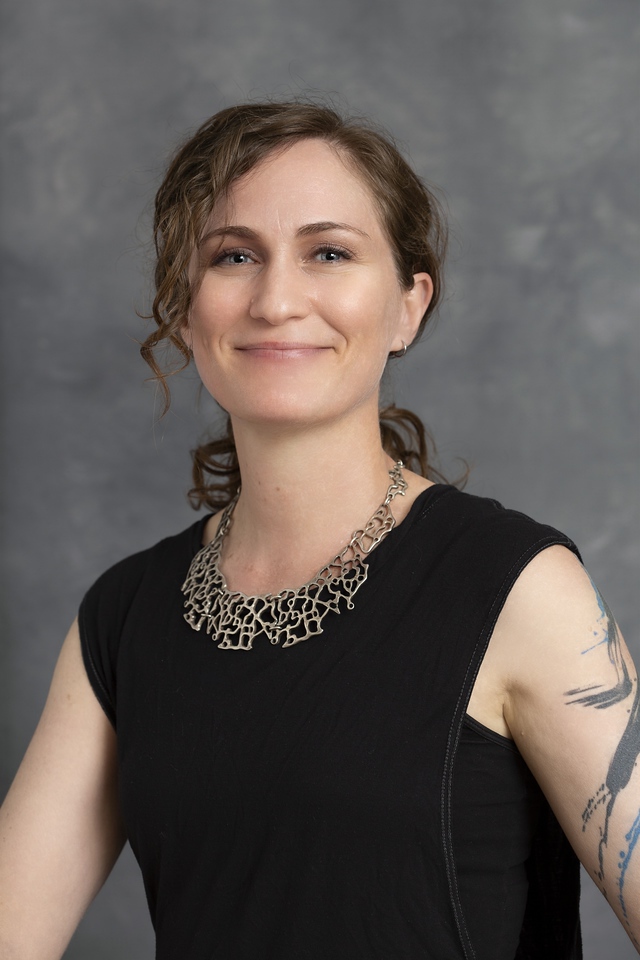
Taylor Murphy
iSchool graduate turns AI strategy into real-world impact

Taylor Murphy ’16 works at the intersection of AI strategy, digital transformation, and organizational change, helping global companies redesign how they operate in AI-driven environments.
Read More

Jaime Banks

Jaime Banks

Expert in human-AI interaction, Jaime leads research on the relationships we form with AI and the implications of those relationships. 

Bei Yu

Bei Yu

Directs the Integrative AI program and researches machine learning and NLP for information integrity in science and healthcare.

Johannes Himmelreich

Johannes Himmelreich

Specializes in AI ethics, public policy, and the philosophy of autonomous systems and algorithmic decision-making.

Faculty Experts

At the Syracuse University School of Information Studies, our faculty and industry leaders are at the forefront of innovation, shaping the future of technology and its impact on society.
With a deep commitment to research, teaching, and mentorship, they guide students through the evolving landscape of information, ethics, and cutting-edge technology.

Frequently Asked Questions

How long does it take to complete the Bachelor’s in Integrative Artificial Intelligence?

The program requires 120 credits to complete. Typically, a bachelor’s degree takes about four years of full-time study.

Is a Bachelor’s in Integrative Artificial Intelligence worth it?

Yes, the program is worth it if you want to work with AI in real-world settings. It combines technical AI training with an applied minor and ethics coursework, preparing you for roles that require both system knowledge and domain understanding.

Is the program available online or only on campus?

The program is offered on campus only at Syracuse University’s main campus in Syracuse, New York, and is not available online.

Meet us in Syracuse, or virtually.

Questions? We’re here to help.

Get access to upcoming events, meet with faculty and current students, connect with alumni, and see what a master’s degree can do for your career and future. Submit your contact info below and we’ll be in touch!

Loading…