
Key Takeaways
- Digital transformation develops as an ongoing capability that aligns people, organizational processes, technology systems, and data practices.
- The most widely used strategies focus on customer experience modernization, cloud management, AI-driven automation, IoT integration across operations, data-driven product innovation, and agile ERP platforms that connect core business functions.
- Skills development plays an important role in sustaining digital initiatives, as organizations rely on education, training programs, and specialized expertise to strengthen their data and technology capabilities.
Many companies invest in new platforms and data systems with the expectation that operations will become more efficient and that services will improve. Yet introducing new technology does not automatically produce those results. Outcomes depend on how the change is planned and carried out across the organization.
Some initiatives lead to measurable improvements in performance and customer engagement, while others produce limited results. Over time, these outcomes have revealed a set of digital transformation strategies that help organizations guide technological change in a structured and deliberate way.
What is a Digital Transformation Strategy?
A digital transformation strategy is a documented plan that outlines how an organization will use specific technology to change the way it operates and creates value. The goal is to introduce new digital tools, rethink how processes work, how services are delivered, and how decisions are informed by data.
This concept is often confused with two related terms: digitization and digitalization. Digitization refers to converting physical information into digital form. Scanning paper files or storing documents in an electronic database are common examples. Digitalization goes one step further by using digital tools to improve existing processes, such as replacing spreadsheets with a customer relationship management system or automating routine workflows.
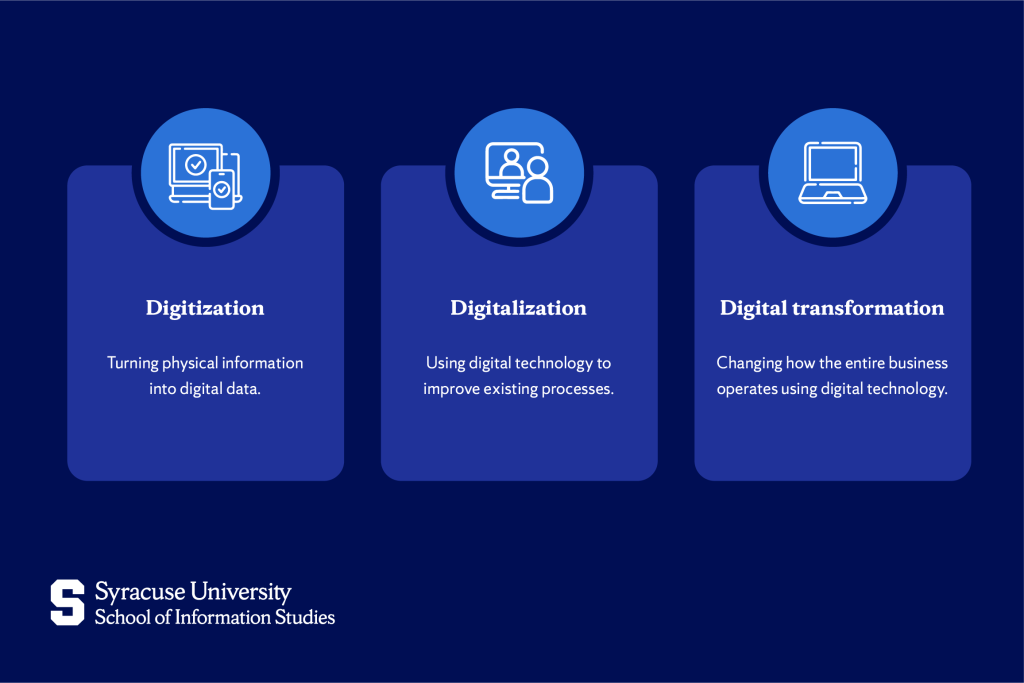
Digital transformation operates at a different level. Instead of focusing on individual tools or isolated processes, it addresses how the organization functions as a whole. Companies redesign workflows, develop new digital services, and use data to guide decisions across departments. The emphasis shifts from simply using technology to restructuring how the business creates and delivers value.
Understanding this distinction helps explain why many initiatives fall short of their goals. Introducing new software can improve efficiency in specific areas, yet the broader operating model may remain unchanged. A digital transformation strategy focuses on aligning technology with organizational change so that digital capabilities support how the entire business operates.
The 4 Core Pillars of a Digital Transformation Framework
Digital transformation frameworks are often organized around a small set of foundational elements that guide how change is implemented. These four pillars help leaders evaluate where readiness exists and where additional support is required before transformation efforts expand further.
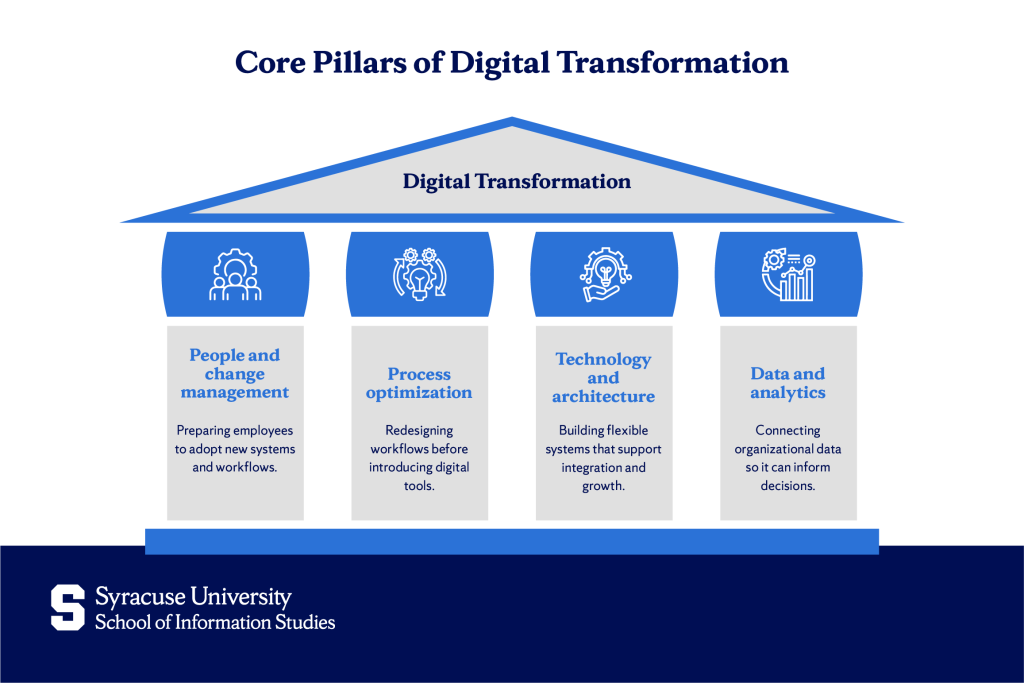
People and Change Management
One of the central pillars of digital transformation focuses on people. Technology introduces new systems, yet employees are the ones who must incorporate those systems into their daily work. When organizations adopt new platforms or digital tools, tasks may be completed differently, and teams may interact with information in new ways.
For this reason, employees need clear guidance on what is changing and how their responsibilities may be affected. Leadership involvement also plays an important role because it shows that transformation is a priority for the organization. Training programs then help employees learn how to use new tools and understand how they fit into existing workflows. When questions or concerns arise during the transition, addressing them early helps employees adapt and allows the transformation effort to progress more smoothly.
Process Optimization
When existing processes contain unnecessary steps or delays, digital tools simply perform the same tasks faster without resolving the underlying problem. For this reason, many organizations begin transformation initiatives by examining how tasks move from one stage to the next and where slowdowns occur. Process mapping helps teams visualize each step in a workflow and identify areas where tasks take longer than necessary or where information must be passed between different departments.
This evaluation helps organizations decide which workflows should be improved and which require a complete redesign before digital tools are introduced. By refining processes first, companies ensure that technology supports efficient operations rather than reinforcing outdated practices.
Technology and Architecture
Another pillar of digital transformation focuses on the technology environment that supports the organization. As companies introduce new digital tools, the underlying systems must allow those tools to connect and function together. If the infrastructure is rigid or built for a single purpose, adding new capabilities becomes difficult.
Modern digital environments often rely on flexible architectures designed to evolve over time. Instead of relying on one large system that handles everything, organizations build platforms that can connect with other applications through integration interfaces. This approach allows teams to introduce new tools when needed and update existing ones without rebuilding the entire system. Over time, this flexibility makes it easier for the organization to expand its digital capabilities as requirements change.
Data and Analytics
Data is generated in various parts of a business, including their finance systems, operational platforms, internal reporting systems, and customer-facing applications. When these sources remain separated, it becomes difficult to see how different activities influence one another.
Digital transformation initiatives often aim to connect these datasets so they can be analyzed together. When information from multiple departments is integrated, analysts and decision-makers gain a clearer view of patterns across the organization. Analytical tools then help interpret this information and convert it into insights that support planning, performance monitoring, and strategic decisions.
6 Proven Digital Transformation Strategies for Modern Business
The following digital transformation strategies focus on areas where technology changes how organizations operate and how value is delivered to customers. These approaches have been adopted by various companies that report measurable improvements in performance and operational efficiency.
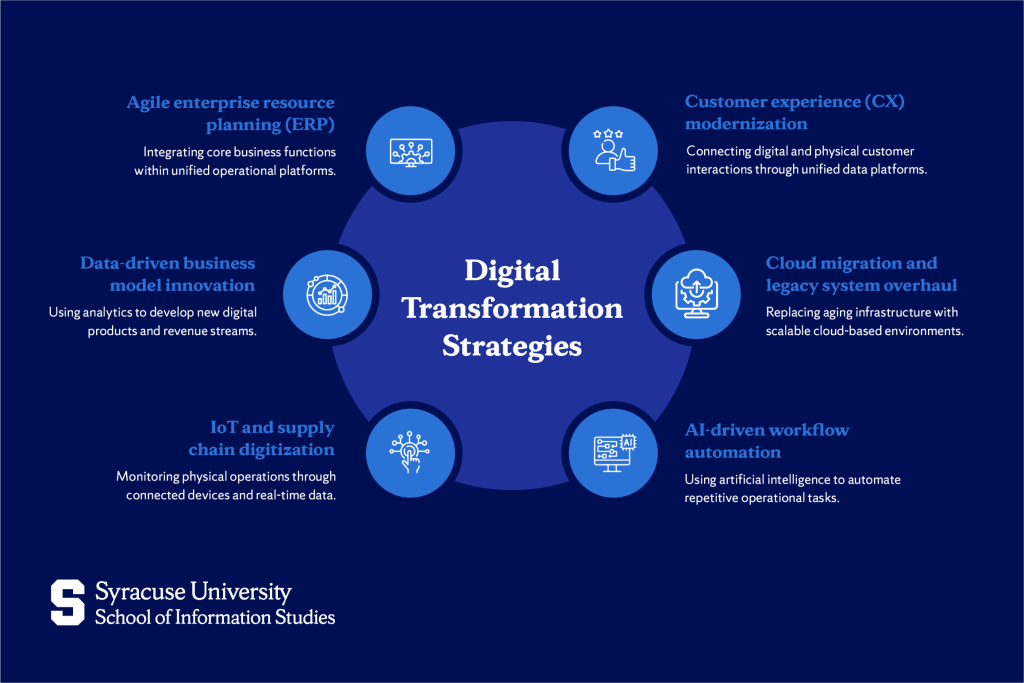
1. Customer experience (CX) modernization
Many transformation efforts begin by improving how customers interact with a brand across digital and physical channels. Customers now move between websites, mobile applications, and in-store experiences during the same purchase journey. Organizations, therefore, invest in systems that connect these interactions and allow customer data to inform service improvements.
Customer experience modernization focuses on understanding how people navigate digital services and identifying where that experience can be improved. Companies analyze browsing behavior, transaction histories, and support interactions to detect patterns in how customers engage with their platforms.
Starbucks illustrates how this strategy works in practice. The company’s mobile application connects ordering, payments, and its loyalty program in a single platform. Customers can order ahead, pay digitally, and receive personalized offers based on previous purchases. Company earnings reports show that mobile orders account for a large share of transactions in the United States, demonstrating how digital tools can transform how customers interact with a brand.
2. Cloud migration and legacy system overhaul
Another widely adopted strategy focuses on replacing aging infrastructure with cloud-based environments. Many organizations still rely on legacy systems originally designed for smaller datasets and slower development cycles. These systems can restrict scalability and make it difficult to integrate new applications.
Moving systems to cloud platforms allows companies to scale computing resources as demand changes and deploy new services more quickly. Cloud environments also simplify integration between applications, which becomes important as organizations expand their digital capabilities.
Netflix built its global streaming platform around this approach. The company migrated its infrastructure from internal data centers to Amazon Web Services. Running the platform in the cloud allows Netflix to handle large spikes in streaming demand while delivering content to millions of users across different regions.
3. AI-driven workflow automation
Automation technologies are increasingly used to reduce the time spent on repetitive administrative tasks. Artificial intelligence systems analyze large datasets, while robotic process automation software performs rule-based actions across digital platforms.
These tools appear frequently in finance operations, customer support systems, and compliance monitoring. Automated processes can review transactions, route service requests, or evaluate documents without requiring manual intervention.
JPMorgan Chase provides a well-documented example. The company developed a system called COIN (Contract Intelligence) that uses machine learning to analyze legal agreements. Work that previously required 360,000 hours of work by legal staff can now be completed by the system in mere seconds.
4. IoT and supply chain digitization
Connected devices have expanded the ability to monitor physical operations in real time. Sensors installed in machinery, vehicles, and logistics infrastructure transmit continuous streams of operational data.
This information provides visibility into equipment performance, inventory movement, and transportation conditions. Analytical systems then interpret these signals to identify inefficiencies or detect potential equipment failures before they disrupt operations.
Industrial manufacturers such as General Electric have developed connected equipment platforms that collect operational data from turbines and other machinery. These sensor networks allow technical teams to monitor performance remotely and schedule maintenance based on actual equipment conditions rather than fixed maintenance intervals.
5. Data-driven business model innovation
Digital transformation can also reshape how organizations generate revenue. When companies analyze large internal datasets, they often discover opportunities to create entirely new services or digital products.
Spotify demonstrates how this strategy supports business growth. The platform analyzes listening activity across millions of users to generate personalized playlists and music recommendations. These insights influence product features, advertising strategies, and partnerships with artists and record labels.
In some cases, organizations convert internal data capabilities into standalone offerings. Businesses that once used analytics only for internal reporting may begin offering data-driven services or digital platforms to customers and partners.
6. Agile enterprise resource planning (ERP)
Enterprise resource planning systems bring together core operational functions such as finance, procurement, and workforce management. Traditional ERP systems often operated as separate modules that limited visibility across departments.
Modern ERP strategies aim to consolidate these functions within integrated digital platforms. When financial, operational, and workforce data are connected, leaders gain a clearer understanding of how different parts of the organization interact.
Unilever standardized its global operations by consolidating roughly 200 separate ERP systems into four unified instances managed as a single platform. Before this shift, regional subsidiaries handled processes such as purchase-to-pay and order-to-cash differently, which led to inefficiencies and higher costs. By identifying best practices and standardizing these workflows, the company improved operational efficiency while maintaining local service delivery across its global markets.
How to Build a Successful Digital Transformation Roadmap
A digital transformation strategy requires a structured execution plan. Organizations move from planning to implementation through the following steps, which help clarify priorities and guide how initiatives are introduced across the business:
- Step 1: Conduct a digital maturity assessment: Review the current technology environment, identify technical debt, and examine where existing systems create operational gaps.
- Step 2: Define clear business objectives and KPIs: Link technology initiatives to measurable outcomes such as customer retention, cost reduction, or process efficiency.
- Step 3: Secure leadership buy-in and budget: Present a clear business case that explains the operational impact and expected return from the transformation effort.
- Step 4: Launch pilot programs: Begin with a focused project in a single workflow or department to test the approach and demonstrate measurable results.
- Step 5: Scale and establish continuous governance: Expand successful pilots across the organization while creating oversight structures that monitor progress and guide future decisions.
Overcoming Common Implementation Challenges
Digital transformation initiatives often encounter operational obstacles during implementation. Many programs slow down because organizations underestimate the practical requirements involved in adopting new systems. Two issues appear frequently during this stage: skills shortages and cybersecurity risks.
Bridging the digital skills gap
Many organizations discover during implementation that teams lack the technical skills required to use new platforms effectively. Companies usually address this through a combination of employee training, targeted hiring, and support from external specialists during complex deployment phases. Partnerships with universities can also strengthen long-term talent pipelines by preparing graduates with the analytical and technical skills required for modern digital environments.
Managing cybersecurity risks
Every new digital platform expands the organization’s attack surface. Cloud systems, connected devices, and integrated applications introduce additional entry points that must be protected. Security measures, therefore, need to be incorporated into system design from the start through access controls, data governance policies, and compliance frameworks. Integrating these safeguards early reduces exposure and prevents costly remediation later.
Conclusion
Technology introduces new possibilities, but progress depends on people who understand how to translate digital tools into operational improvements and strategic decisions.
This capability has become increasingly important as companies rely on data systems, automation technologies, and digital platforms to guide business activity. Professionals who can analyze data, interpret technological change, and connect those insights to business priorities play a central role in shaping how organizations evolve.
Developing that expertise begins with strong analytical training and practical experience working with modern data systems. The Applied Data Science master’s degree at Syracuse University’s iSchool prepares students to work in this field and guide digital transformation across contemporary organizations.
Frequently Asked Questions
What are the 4 main areas of digital transformation?
The four main areas are people and change management, process optimization, technology and architecture, and data and analytics.
How long does a digital transformation take?
There is no single fixed duration for digital transformation because organizations implement new systems and processes at different speeds and often expand initiatives in stages. In most cases, end-to-end digital transformations extend across several years rather than taking place as a one-off project.
Who should lead the digital transformation strategy?
Responsibility often sits with a Chief Digital Officer (CDO) or Chief Information Officer (CIO). Effective programs also involve direct support from the CEO and participation from leaders across business units so that changes align with operational priorities throughout the organization.