
Key Takeaways
- Database administrators manage, secure, and optimize the databases that power modern business operations.
- Core DBA responsibilities include performance monitoring, data security, backup management, and deployment support.
- The U.S. Bureau of Labor Statistics projects 4% job growth for database administrators from 2024 to 2034.
- Formal education in data science or information technology, combined with certifications, can open the door to a DBA career.
Every time you search for a product, log into an account, or complete a transaction online, you’re interacting with a database. Behind those databases are professionals who keep the data organized, accessible, and secure: database administrators.
As organizations depend more heavily on data to guide decisions, demand for skilled DBAs continues to grow. Understanding what a database administrator does is a smart first step, whether you’re exploring a tech career or weighing a data-focused degree.
What Is a Database Administrator?
A database administrator (DBA) is an IT professional who manages an organization’s databases, making sure data is stored correctly, runs efficiently, and stays protected. A DBA is the person who keeps the engine running: they may not write the software that uses the data, but without them, the systems that depend on data would quickly break down.
DBAs work with several types of databases:
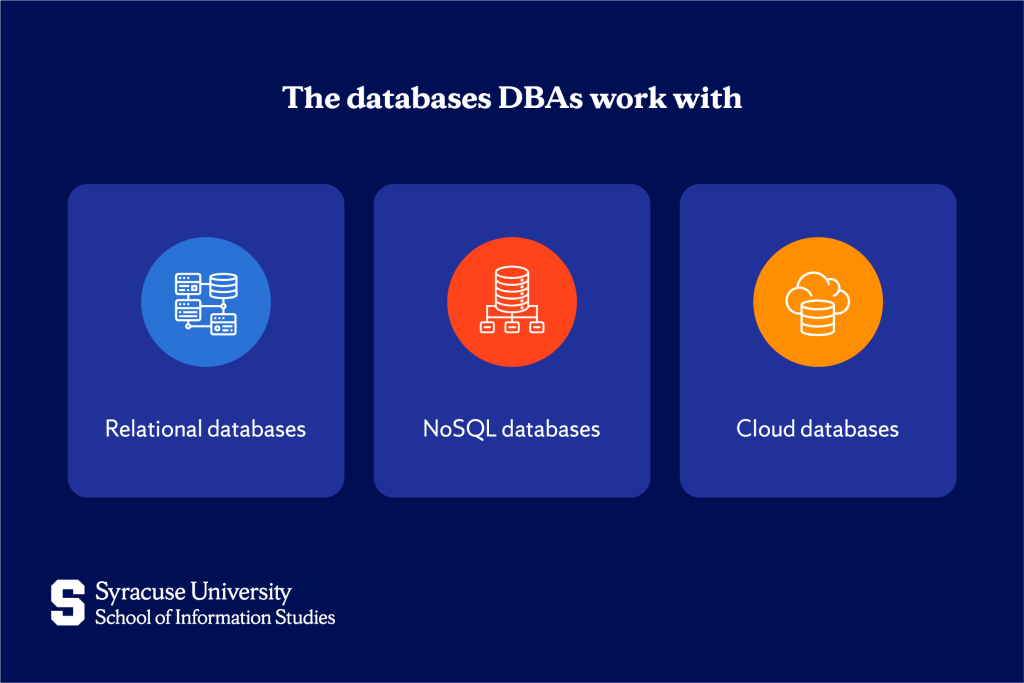
- Relational databases (such as MySQL, Oracle, and Microsoft SQL Server) store data in structured tables with defined relationships.
- NoSQL databases (such as MongoDB and Cassandra) handle unstructured or semi-structured data, often used in applications that need to scale quickly.
- Cloud databases (such as Amazon RDS or Google Cloud SQL) let organizations store and manage data through cloud platforms, reducing hardware dependency.
Regardless of the database type, DBAs serve as the connection between raw data and the people and systems that rely on it. They help organizations improve operational efficiency, maintain regulatory compliance, and support the data-driven decisions that shape business strategy. In a retail company, for example, DBAs keep inventory and customer order data accurate and always accessible. In a hospital, they ensure patient records load quickly and remain secure.
Main Responsibilities of a Database Administrator
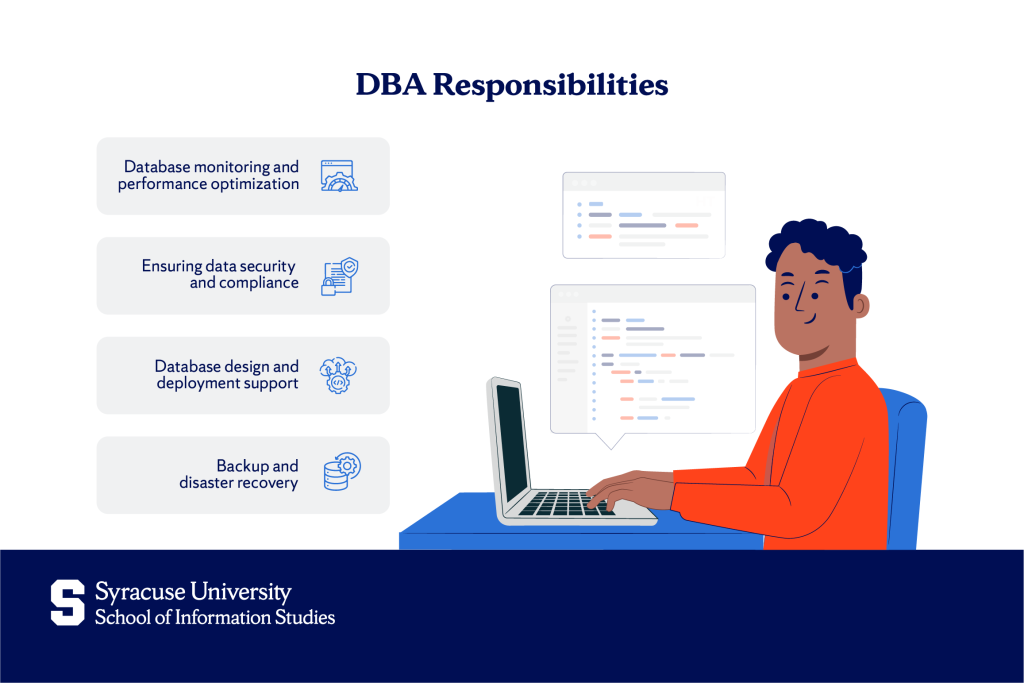
A DBA’s day-to-day work covers a wide range of technical tasks, from keeping systems running at peak speed to making sure sensitive data never falls into the wrong hands. While the specifics vary by industry and organization size, most DBAs are responsible for the following core areas.
Database monitoring and performance optimization
DBAs keep databases running smoothly by tracking performance metrics, tuning queries to run faster, managing indexes, and allocating system resources effectively. Tools like Oracle Enterprise Manager and Microsoft SQL Server Management Studio help DBAs monitor activity in real time. When a database slows down, they diagnose the issue and apply fixes, often before end users notice a problem.
Performance work is ongoing. As data volumes grow and user activity increases, a query that ran efficiently six months ago may start causing bottlenecks. DBAs revisit indexes, review execution plans, and adjust configurations regularly to stay ahead of slowdowns before they affect business operations.
Ensuring data security and compliance
Data security is one of the most critical parts of the job. DBAs control who has access to which data, set up user authentication protocols, apply encryption, and ensure databases comply with regulations like HIPAA, GDPR, or SOX. A DBA working in healthcare, for example, might regularly audit access logs to confirm that only authorized staff can view patient records. This work overlaps directly with data security management, an area that spans technical controls, policy, and organizational governance.
DBAs also respond when something goes wrong. For example, if a suspicious login is detected or a potential breach is flagged, the DBA is typically the first technical responder, locking down access, investigating the scope, and working with IT security teams to contain the issue.
Backup and disaster recovery
If a database crashes or data gets accidentally deleted, an organization needs a way to recover quickly. DBAs plan and test backup procedures, schedule automated backups, and build disaster recovery protocols that reduce downtime. For instance, a DBA at a financial services firm might run weekly full backups alongside daily incremental ones, ensuring the company can restore to within hours of any incident.
Testing matters as much as planning. A backup that has never been restored is an untested assumption. DBAs regularly run recovery drills to confirm that backups are complete and restorable within the timeframes the business requires.
Database design and deployment support
When a company launches a new application or system, DBAs help design the underlying database structure. This involves creating schemas (the blueprint for how data is organized), choosing the right data types, and supporting development teams during deployment.
DBAs also weigh in on decisions like normalization (reducing redundant data across tables) and indexing strategy, which affects how quickly the database can retrieve information at scale. Making the right choices early has a big impact on how well the system performs once it starts handling real traffic.
Skills and Qualifications Required for a Database Administrator
Technical skills help you get started, but the DBAs who advance are the ones who pair that expertise with sharp thinking and strong people skills.
Technical expertise
DBAs need hands-on proficiency with database management systems (DBMS) like Oracle, MySQL, PostgreSQL, or Microsoft SQL Server. SQL fluency is non-negotiable: it’s the primary language for querying and managing relational databases. Familiarity with cloud platforms such as AWS, Azure, and Google Cloud is also expected, as more organizations migrate their databases off on-premise servers.
Scripting skills in languages like Python or Bash are also useful. Many routine DBA tasks (backups, monitoring checks, and user provisioning) can be automated with scripts, freeing up time for more complex work. DBAs who can write and maintain those automations are especially valuable in lean IT environments.
Analytical and problem-solving skills
When a database performs poorly or produces unexpected results, a DBA needs to think critically and methodically. That means reading execution plans, interpreting performance metrics, and testing potential fixes before applying them to a live environment.
Troubleshooting under pressure is also part of the job. When a production database goes down during peak hours, a DBA needs to move quickly and systematically, ruling out causes, isolating the problem, and restoring service without making things worse. The ability to stay calm and think clearly in high-stakes moments is a skill that develops with experience, but it starts with a solid analytical foundation.
Communication and collaboration
DBAs rarely work in isolation. They coordinate with software developers, IT managers, compliance officers, and executives, each with different priorities and technical knowledge. A DBA who can translate complex database concepts into plain language builds trust across teams and makes sure data needs are addressed at every stage of a project.
Written communication matters too. DBAs document processes, write runbooks for disaster recovery, and produce reports on system performance that non-technical stakeholders need to understand.
Types of Database Administrators
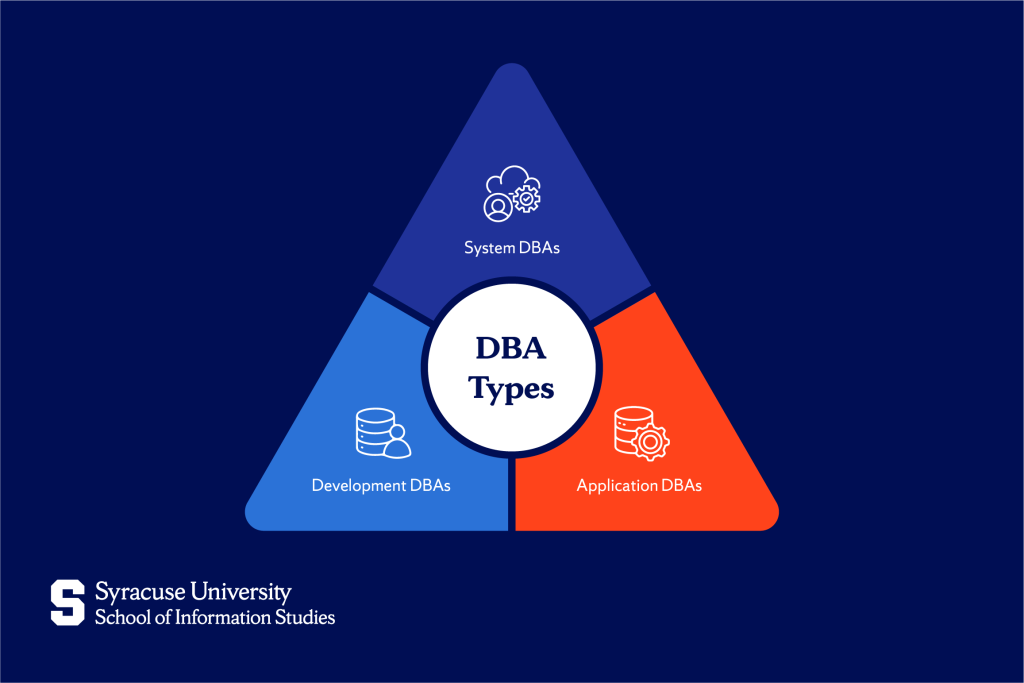
Not all DBAs do the same work. Some manage infrastructure, some support specific applications, and others work with developers before a system goes live.
System DBAs
System DBAs focus on the infrastructure side of database management. They handle server installations, configurations, patch management, and performance tuning at the operating system level. Their work ensures the physical or virtual environments hosting databases remain stable and optimized. In organizations running large on-premise data centers, system DBAs are often the ones coordinating with hardware and network teams to keep everything running reliably.
Application DBAs
Application DBAs specialize in supporting specific software systems, like an ERP or CRM platform. They optimize database operations tied to a particular application and work closely with development teams to ensure the app and its database perform together efficiently. When a new software release goes out, the application DBA helps test database changes and makes sure nothing breaks in the live system.
Development DBAs
Development DBAs focus on the design and pre-production phase. They help teams create database structures, write stored procedures, and test performance in non-production environments before anything goes live. Their work reduces the risk of problems once a system reaches production. In agile teams, they work in sprints alongside application teams and review any code that affects the database.
Career Path and Growth Opportunities
A career in database administration offers a clear progression, strong compensation, and long-term demand across many industries. Formal education in data science or information technology, combined with certifications, can open the door to a DBA career.
Entry-level to senior DBA progression
Most DBAs start in junior or associate roles, often coming from backgrounds in IT support, software development, or data analysis. From there, the path typically moves toward mid-level DBA, senior DBA, and eventually database architect, a role focused on designing large-scale database systems from the ground up. Senior DBAs may also transition into management or consulting, particularly in organizations where data infrastructure is central to the business model.
According to the U.S. Bureau of Labor Statistics, jobs for database administrators and architects are expected to grow by 4% from 2024 to 2034. About 7,800 openings are projected each year, with a median salary above $100,000.
Industries with the strongest demand for DBAs include healthcare, finance, government, retail, and technology. Any sector that collects and processes large volumes of data needs professionals who can manage that data responsibly, which makes DBA skills useful across many industries.
Certifications and professional development
Earning certifications is one of the fastest ways to demonstrate expertise and advance in a DBA career. Widely recognized credentials include:
- Oracle Certified Professional (OCP)
- Microsoft Certified: Azure Database Administrator Associate
- AWS Certified Database – Specialty
- IBM Certified Database Administrator
Beyond formal certifications, it’s important to keep up with emerging tools. Cloud-native database services, AI-assisted query optimization, and automated monitoring platforms are changing how DBAs work. Professionals who treat learning as an ongoing part of the job tend to move up faster and remain in demand as technology changes.
The Bottom Line
Database administrators are the professionals who make sure the data organizations run on stays reliable, secure, and accessible. From designing schemas to defending against security threats, their work touches nearly every part of a business, and as data volumes grow, the role of the DBA is only becoming more central.
If you enjoy solving problems, like working with technical systems, and want a career with steady demand and growth, database administration is worth considering.
You can explore the Applied Data Science Bachelor’s Degree and the Applied Data Science Master’s Degree at Syracuse University’s iSchool. Both programs focus on building practical skills in managing, analyzing, and working with data, giving you a strong foundation for roles in data management and related fields.
Frequently Asked Questions (FAQs)
Is a database administrator different from a data analyst?
Yes, these roles serve different purposes. A data analyst focuses on interpreting data to find patterns and generate insights, often working with tools like Python, SQL, or Tableau. A DBA is responsible for maintaining the systems and structures that store that data. While there is some overlap in technical skills, particularly SQL, DBAs manage the infrastructure, while analysts work with the output. In larger organizations, both roles exist side by side and collaborate regularly.
What qualifications do I need to become a DBA?
Most DBA positions require a bachelor’s degree in computer science, information technology, or a related field. Certifications in specific DBMS platforms (Oracle, Microsoft, AWS) strengthen your candidacy significantly. Practical experience through internships, projects, or entry-level IT roles also matters.
What industries hire database administrators?
DBAs work across virtually every sector. Healthcare organizations rely on them to manage patient records; financial institutions need them to handle transaction data securely; government agencies use them to maintain large public databases; and tech companies depend on them to scale data infrastructure. As more industries rely on data, the number of employers hiring DBAs continues to grow.