
Key Takeaways
- Becoming a data manager typically requires a combination of formal education, practical experience working with data systems, and gradual progression through related roles such as data analyst or database administrator.
- Both technical skills, such as SQL, Python, cloud platforms, and data governance knowledge, along with interpersonal skills like leadership and communication, support success in data management roles.
- Common challenges include gaining the required experience and keeping up with evolving data technologies, which professionals address through hands-on work and continued learning.
Every organization that relies on data, which at this point includes nearly every organization, needs someone responsible for ensuring that information remains accurate, accessible, secure, and usable. That responsibility falls to the data manager.
Data management offers a career built around organizing the systems that allow organizations to use information effectively. It combines technical knowledge with oversight of how data moves through an organization, making it a role that sits close to both operational decision-making and long-term strategy.
For those interested in entering this field, understanding how to become a data manager is an important starting point in seeing what the role involves and the preparation it requires.
How to Become a Data Manager
Organizations need reliable data systems in order to operate effectively. Building a career in data management involves developing the technical knowledge and practical experience required to maintain those systems and guide how information is handled.
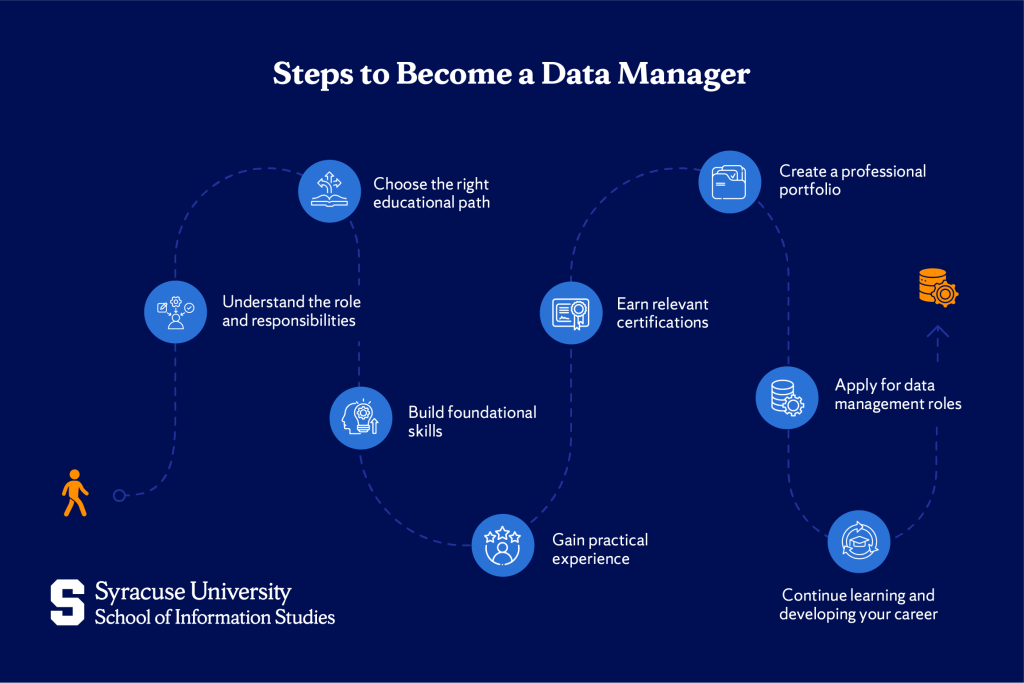
To become a data manager, you need to go through the following steps:
Step 1: Understand the role and responsibilities
To begin, it helps to have a clear understanding of what data managers actually do. A data manager oversees how data is stored and how it can be accessed within an organization. The role also includes maintaining data quality and establishing governance policies so teams can rely on the information they use.
This role includes responsibilities such as:
- Designing and maintaining database systems
- Enforcing data governance standards
- Monitoring data quality
- Working with analysts, technical and IT teams, and business stakeholders to maintain a reliable data infrastructure
- Ensuring sensitive information is handled according to privacy regulations
Step 2: Choose the right educational path
Most employers hiring for data manager roles look for at least a bachelor’s degree in computer science, information systems, data science, statistics, or business analytics. Students interested in this career often benefit from programs that combine technical training with data analysis skills.
The Applied Data Science Bachelor’s degree at Syracuse University’s iSchool develops these foundations through courses in data collection, statistical analysis, data mining, data interpretation, as well as technical training used in modern data environments.
Advanced education can become valuable as professionals move into senior or enterprise-level roles. Graduate programs, like the Applied Data Science Master’s degree at Syracuse University, provide deeper technical preparation and a broader understanding of how data systems support organizational decision-making.
Step 3: Build foundational skills
Data managers rely on a combination of technical knowledge and interpersonal abilities. Employers often look for familiarity with core tools used to manage data systems, along with the communication and organizational skills needed to coordinate work across teams.
Technical skills include:
- SQL: Essential for querying and managing relational databases.
- Python or R: Used for data preparation, automation, and analytical workflows.
- Database management systems: Experience with platforms such as MySQL, PostgreSQL, Oracle, or Microsoft SQL Server.
- Cloud data platforms: Familiarity with services provided by AWS, Azure, or Google Cloud.
- Data governance concepts: Understanding access controls, data lineage, and regulatory requirements.
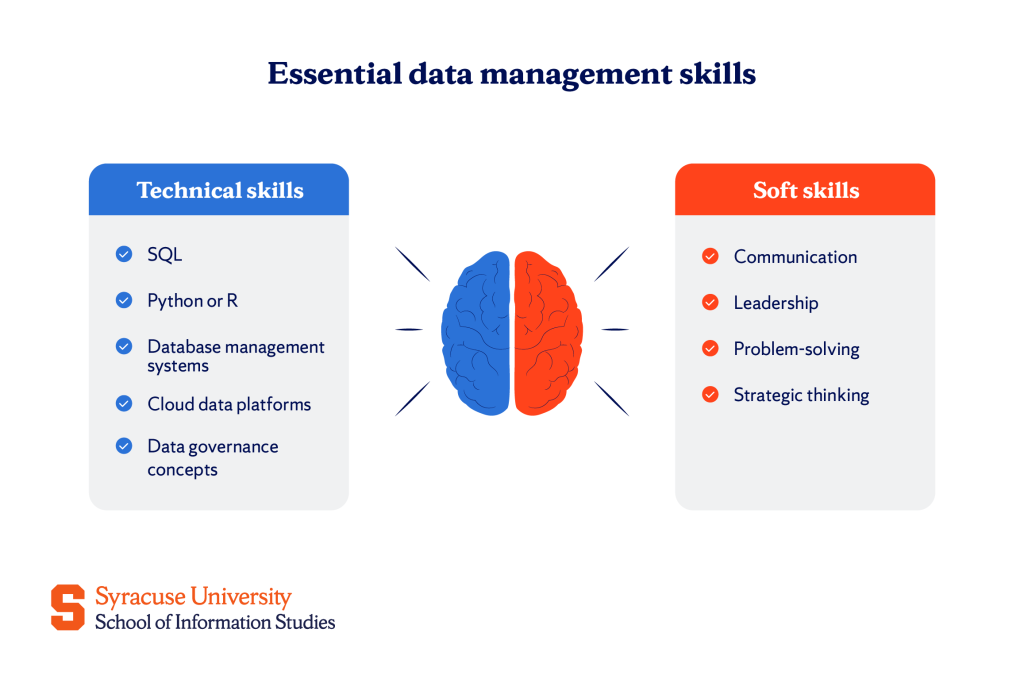
Soft skills also play an important role:
- Communication: Explaining data processes and policies to both technical teams and business stakeholders.
- Leadership: Coordinating projects and guiding teams responsible for managing data systems.
- Problem-solving: Identifying issues related to data quality, access, or system performance.
- Strategic thinking: Understanding how data systems support broader organizational goals.
Step 4: Gain practical experience
Working with real data systems provides experience that coursework alone cannot fully replicate. Many professionals begin building this experience through:
- Data analyst or database administrator roles: Common entry points that build directly relevant technical skills.
- Internships: Short-term roles that expose students to production data systems and professional workflows.
- Research assistant positions: Opportunities to support faculty projects that involve data collection and analysis.
- Volunteer or freelance projects: Nonprofit organizations often need help managing program or donor data, which can become strong portfolio material.
Step 5: Earn relevant certifications
Certifications can strengthen professional credibility and help develop specialized knowledge. Several credentials are widely recognized in the data management field:
- Certified Data Management Professional (CDMP): A widely recognized certification offered by DAMA International covering core data management concepts.
- Certified Analytics Professional (CAP): Focuses on applied analytics skills across the data lifecycle.
- AWS Certified Data Analytics: Relevant for roles working with cloud-based data infrastructure.
Step 6: Create a professional portfolio
Employers often look for evidence of applied work rather than theoretical knowledge alone. A professional portfolio can demonstrate how you approach real data management challenges.
Examples of portfolio content include:
- Database design projects: Schemas you have built, along with documentation explaining design choices.
- Data quality reports: Examples of audits or quality reviews that led to improvements in data processes.
- Dashboards and visualizations: Work created in Tableau, Power BI, or similar platforms that communicate data insights.
- Process documentation: Data governance frameworks, data dictionaries, or policies you helped develop.
- Case studies: Descriptions of problems solved using data management techniques.
Projects from coursework, internships, or independent work can also all contribute to a strong portfolio as long as they clearly show your involvement.
Step 7: Apply for data management roles
When applying for positions, several practices can improve the likelihood of success:
- Tailor your resume to each role: Reflect the terminology used in the job description.
- Highlight outcomes rather than tasks: Emphasize measurable improvements achieved through data management work.
- Build connections within data communities: Professional groups such as DAMA chapters or local meetups often share job opportunities.
- Prepare for technical interviews: Employers may ask SQL questions or scenario-based questions related to data governance and quality.
- Consider related job titles: Roles such as Data Operations Lead, Database Administrator, or Data Quality Analyst often lead to data manager positions.
Step 8: Continue learning and developing your career
Data management technologies continue to evolve as organizations adopt new platforms and analytical tools. To stay updated and continue growing into the field, you should:
- Follow developments from major data platform providers such as AWS, Azure, and Snowflake.
- Attend conferences or professional events focused on data management and analytics.
- Pursue advanced coursework or graduate study in applied data science or information management.
- Stay informed about regulatory changes that affect how organizations manage and protect data.
Developing familiarity with emerging technologies such as artificial intelligence can also become relevant, as these tools are increasingly integrated into data quality monitoring and data pipeline management.
Career Progression for Data Managers
Careers in data management typically develop over time as professionals gain technical experience and take on greater responsibility for how data systems operate within an organization.
Entry‑level to mid‑career
Most data managers begin their careers in roles such as data analyst or database administrator before moving into management positions. During this period, professionals develop hands-on knowledge of how data systems function and how information moves through an organization. They may also begin taking ownership of projects and coordinating work across teams.
As experience grows, mid-career data managers often become responsible for specific areas of an organization’s data environment. This may involve overseeing a particular dataset, managing data quality processes, or supporting compliance and governance initiatives within a department or operational unit.
Senior and leadership roles
At more advanced stages, data management careers can develop in several directions:
- Director of Data Management: Leads data governance programs and oversees teams responsible for maintaining organizational data systems.
- Data Product Manager: Focuses on how data platforms and datasets support digital products, working closely with technical and product teams.
- Head of Data or Chief Data Officer (CDO): Provides enterprise-level leadership for data strategy and governance, often reporting directly to executive leadership.
Common Challenges and How to Overcome Them
Careers in data management develop within an environment where technology and tools evolve quickly. Professionals entering the field often encounter a few common obstacles early on, particularly when building technical expertise and gaining relevant experience.
Keeping up with evolving technologies
Rather than trying to learn every new tool, data managers focus on understanding the underlying principles behind data systems. Concepts such as database design, data governance, and data architecture remain relevant even as specific technologies change. Professionals then update their technical skills gradually by learning new platforms used within their organization or industry.
Staying informed also helps. Many data managers follow updates from major data platform providers, attend professional events, or participate in industry communities where practitioners discuss how new tools are being used in real systems.
Gaining required experience
Many aspiring data managers encounter a challenge when job postings request several years of data management experience. Entry-level roles do not always carry that title, which can make the transition into management positions less straightforward.
One effective approach is to build experience within related roles. Professionals working as data analysts or database administrators often have opportunities to take responsibility for data-related tasks. Managing a reporting workflow or documenting data governance procedures can contribute to practical experience that supports future data management roles. Mentorship from experienced data professionals can also guide this development and provide insight into what the role requires.
Your Next Step Toward Becoming a Data Manager
Becoming a data manager depends on a combination of education, practical experience, and continued learning as data systems evolve. Organizations hiring for this role look for individuals who understand how data supports operations and decision-making across the business. This perspective requires both technical knowledge and the ability to work across teams responsible for managing and using organizational data.
Those interested in building the knowledge and capabilities needed for the role can benefit from the Applied Data Science degree at Syracuse University’s iSchool. Our program offers preparation in data collection, data mining, statistical analysis, data interpretation, and the technologies used to manage modern data environments.
FAQ’s
Is certification necessary to become a data manager?
Certification is not required, though it can strengthen your profile when applying for roles. The Certified Data Management Professional (CDMP) is one of the most recognized credentials in the field and shows familiarity with data governance and management practices. Certifications can be especially helpful for professionals moving into data management from another field or applying to organizations with formal hiring requirements.
How long does it take to become a data manager?
Many professionals reach a data management role within 3 to 7 years of starting in an entry-level data position. The timeline depends on the education, technical skills, and experience built during those early roles. A strong academic foundation and well-documented project work can help shorten that path.
Can I become a data manager without a technical degree?
Yes, although it usually requires additional preparation. Professionals from business, operations, or project management backgrounds sometimes transition into data management by developing technical skills alongside their existing experience. Learning tools such as SQL and gaining familiarity with data governance practices can make that shift easier.