
Key Takeaways
- Information systems combine people and technology to solve business problems.
- The five key components of information systems are: hardware, software, data, networks, and people.
- IT is the tool; IS is the business application of that tool. IT focuses on technical infrastructure while IS focuses on business outcomes.
- The IT field offers various careers, including systems analyst, IS manager, and database administrator.
Many people think information systems are just computers and servers. They’re not. Information systems is the study of how people use technology to achieve business goals. The difference matters because while computer science focuses on building technology, information systems focus on applying that technology to create value.
For example, a car engine is impressive engineering, but it’s useless without a driver, roads, fuel, and a destination. Information systems are the complete package: the technology plus the people, processes, and strategy that make it useful. In the business world, information systems are integrated sets of components for collecting, storing, and processing data to provide information, knowledge, and digital products.
Whether you’re running a small business or working at a Fortune 500 company, information systems help you turn raw data into decisions. Understanding what information systems are and how they work is essential literacy in the modern business world.
The 5 Key Components of Information Systems
Information systems aren’t single pieces of technology; they’re like ecosystems with five interconnected parts. Understanding each component helps you see why information systems require both technical and business expertise.
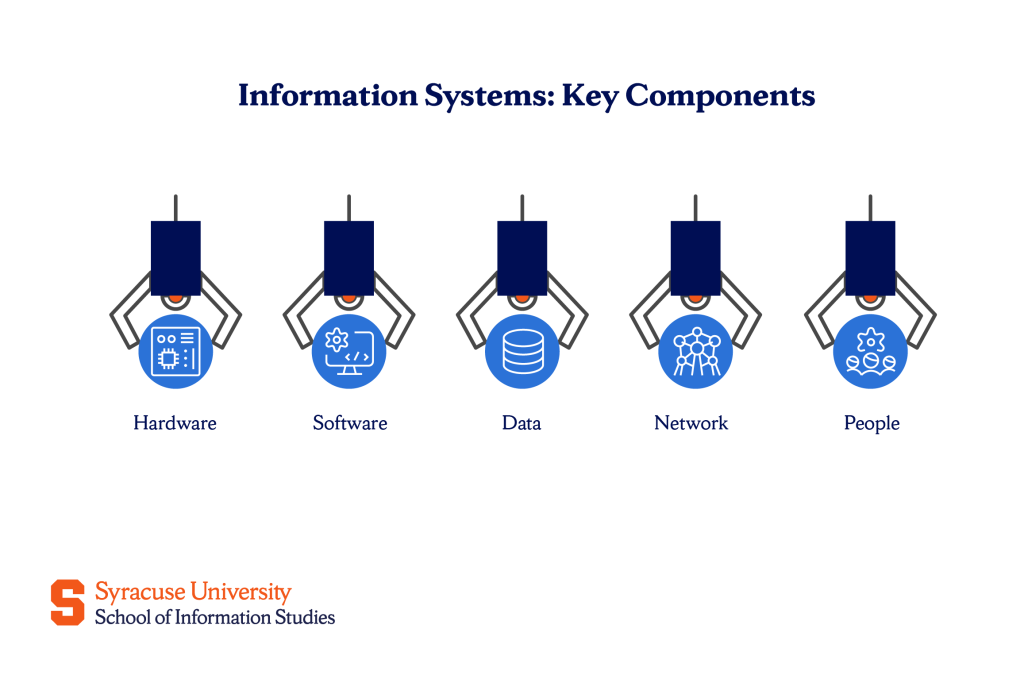
Hardware
Hardware is the physical layer, or the tangible equipment you can touch. This includes servers that store and process data, desktop and laptop computers where employees work, smartphones that enable mobile access, and increasingly, IoT sensors that collect real-time data. Modern hardware also includes point-of-sale terminals, barcode scanners, and industrial sensors. Hardware decisions affect system performance, security exposure, operational reliability, and long-term costs.
Software
Software is the instruction layer that tells hardware what to do. System software includes operating systems like Windows, Linux, or macOS that manage hardware resources. Application software solves specific business problems, with tools like Microsoft Excel for analysis, Salesforce for customer relationship management, or SAP for resource planning. Software determines what tasks an information system can perform, and organizations carefully select and integrate applications to match their business processes.
Data
Data is the fuel that powers information systems. Raw data consists of unorganized facts, like numbers, text, and dates, that don’t mean much alone. When processed and organized, data becomes information that supports decisions. Information systems store data in databases using technologies like SQL or cloud storage platforms.
The challenge isn’t just storing data; it’s maintaining quality, ensuring security, and making data accessible to the right people at the right time. Effective information management determines which data to collect, how long to retain it, and how to protect it while making it useful.
Network (telecommunications)
Networks form the connectivity layer that enables different parts of an information system to communicate. The internet links organisations with customers and partners worldwide, while intranets support internal communication within an organisation, and extranets provide controlled access for selected external partners such as suppliers or distributors.
Network speed and reliability directly affect user experience, since slow networks frustrate employees, while downtime can halt business operations entirely. Cloud computing has further changed networking by allowing applications and data to be accessed from virtually anywhere with an internet connection.
People
People are the most critical component, and the one most often overlooked. This includes end users who rely on the system, technical specialists who build and maintain it, and managers who decide how it should support business strategy. Without people designing procedures, training users, and interpreting results, technology delivers no value.
The best information system fails if people don’t understand how to use it or don’t trust the information it produces. This human element is what separates information systems from pure computer science.
Information Systems vs. Information Technology
People often use “information systems” and “information technology” interchangeably, but they’re distinct concepts. IT is one part of IS rather than the whole concept.
Focus
Information technology concentrates on the technical foundation. This includes maintaining servers, keeping networks stable, managing system security, and ensuring software runs as intended.
Information systems place attention on outcomes, examining how technology supports organisational goals, streamlines operations, or enables new ways of working. The question shifts from “Does the system work?” to “Does the system help the organisation perform better?”
Goals
IT teams typically define success through technical reliability, system availability, and performance benchmarks. Information systems professionals evaluate success through organisational impact. This includes improved decision-making, smoother workflows, stronger customer experiences, and measurable operational gains.
Scope
IT work stays largely within the technical domain, covering infrastructure setup, troubleshooting, upgrades, and security management. Information systems extend beyond technology itself, combining technical understanding with business planning, process design, user adoption, and long-term evaluation. This broader scope reflects how technology fits into everyday work rather than existing as a standalone tool.
A helpful way to understand the difference is to think of IT as the tools used to build a workspace, while information systems represent how that workspace is organised, used, and adapted over time. The tools matter, but so do the layout, the workflows, the people using them, and the goals they are meant to support.
This distinction matters when considering career direction. If you enjoy hands-on technical problem-solving and working closely with infrastructure or code, IT may be the right fit. If you are more interested in how technology supports organisations, influences decisions, and changes how people work, information systems offers a broader professional path.
The 4 Main Types of Information Systems
Organizations use different types of information systems at different levels. As responsibility increases and decision-making becomes more strategic, the systems change to support different kinds of decisions.
Transaction processing systems (TPS)
Transaction processing systems handle routine daily transactions that keep an organisation’s core operations running. Examples include payroll systems, point-of-sale terminals, inventory management systems, and online reservation systems.
TPS systems process high volumes of standardized transactions and feed data to higher-level systems. When you swipe your credit card at a store, a TPS records that transaction instantly, updating inventory, processing payment, and generating a receipt. The data captured by TPS becomes the foundation for all other information systems in the organization.
Management information systems (MIS)
Management information systems serve mid-level managers who need reports to monitor performance and make tactical decisions. MIS takes data from transaction processing systems and creates structured reports like monthly sales summaries or inventory turnover analysis.
These systems help managers answer questions like: “Are we meeting our targets?” and “Which products are selling well?” MIS typically produces scheduled reports, daily, weekly, or monthly, that track key performance indicators and connect operational data with higher-level decision-making.
Decision support systems (DSS)
Decision support systems are interactive tools designed to help managers solve specific, non-routine problems. Unlike MIS, which produces standardized reports, DSS allows users to manipulate data, run scenarios, and explore “what if” questions.
A bank might use DSS to decide whether to approve a loan by analyzing credit scores and risk models. Financial planners use DSS to model investment portfolios under different market conditions. These systems empower managers to make better decisions by providing analytical tools rather than predetermined answers.
Executive support systems (ESS)
Executive support systems serve top-level executives who need strategic information for long-term planning. ESS presents data through dashboards and visualizations that show organizational performance at a glance. CEOs might use ESS to monitor overall profitability, market share trends, or competitive positioning.
These systems answer questions like: “Should we expand into new markets?” “How are industry trends affecting our business?” ESS pulls data from multiple sources and presents it in formats designed for quick comprehension by busy executives.
Why Are Information Systems Important?
Information systems have become fundamental to how modern organizations operate and compete. The business value extends far beyond automating existing processes.
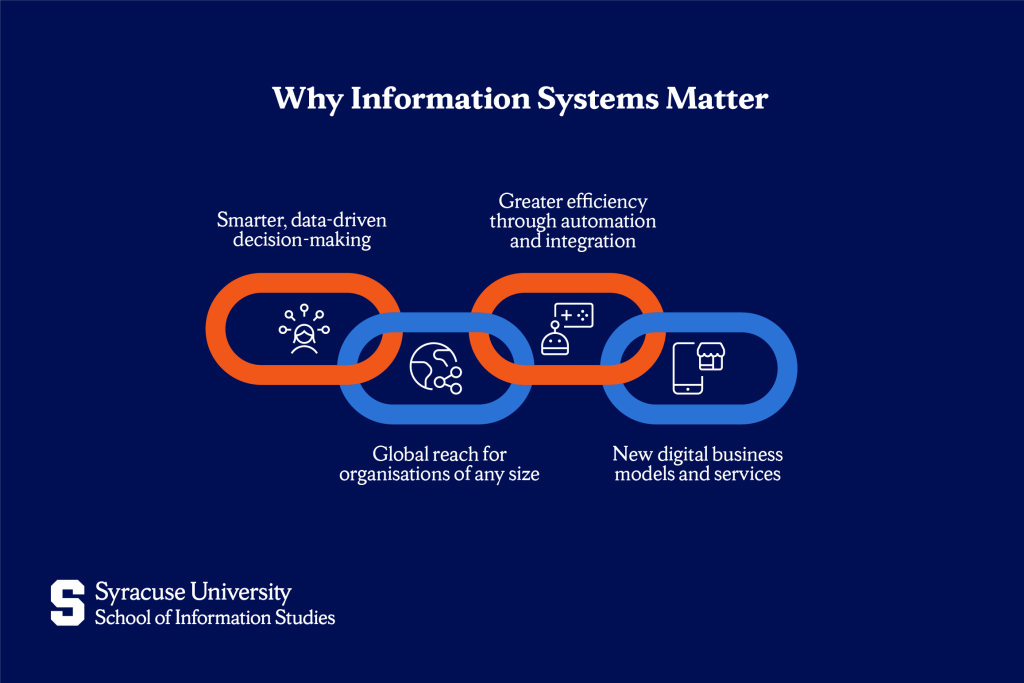
Data-driven decisions
Information systems transform gut-feel decision-making into evidence-based strategy. Instead of guessing which products customers want, retailers analyze purchase patterns. Instead of assuming which marketing campaigns work, companies track conversion rates. Information systems remove guesswork by making data accessible and actionable. Organizations without effective information systems operate in the dark, making decisions based on intuition or outdated information.
Global reach and efficiency
Information systems enable small companies to compete globally, something that was impossible before digital technology. An entrepreneur can sell products worldwide through e-commerce platforms, communicate with international partners via video conferencing, and manage remote teams across time zones.
Efficiency gains from automation, integration, and real-time information directly impact profitability. Companies that manage information effectively can operate with lower costs, faster cycle times, and better customer service.
New business models
Information systems improve existing businesses and enable entirely new ways of creating value. Netflix replaced video rental stores with streaming. Uber transformed transportation without owning vehicles. These business models only work because information systems connect customers, providers, and payments instantly.
Digital transformation continues to create opportunities for innovation through subscription models, platform economies, and data-driven services.
Top Careers in Information Systems
The information systems field offers diverse career paths for people who want to work at the intersection of business and technology.
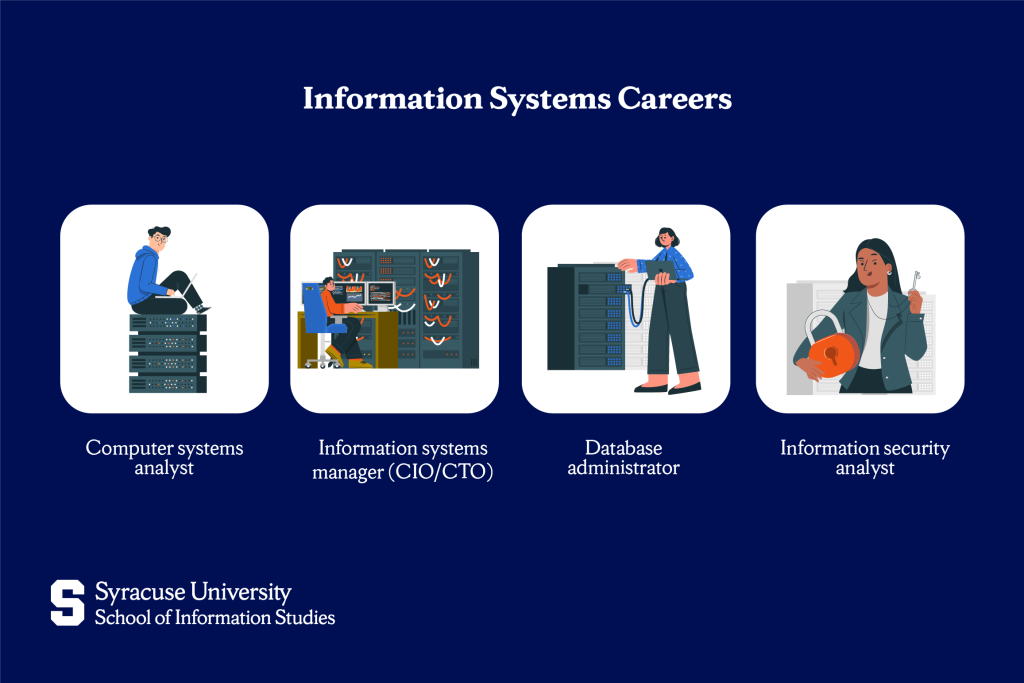
Computer systems analyst
Systems analysts are bridge builders: they translate business needs into technical requirements and ensure solutions actually solve intended problems. You’ll interview stakeholders to understand challenges, document current processes, recommend improvements, and work with developers to build solutions.
This role requires strong communication skills since you’re constantly moving between business and technical audiences. Typical responsibilities include conducting cost-benefit analyses, creating system specifications, testing new systems, and training users.
Information systems manager (CIO/CTO)
IS managers lead technology strategy for departments or entire organizations. As you advance to roles like Chief Information Officer (CIO) or Chief Technology Officer (CTO), you shape how technology supports business strategy, manage budgets, and make decisions about system investments.
These leadership positions require broad business knowledge beyond technical skills. You’ll present to boards, negotiate with vendors, manage change initiatives, and ensure technology investments align with organizational goals.
Database administrator
Database administrators are the keepers of organizational data, ensuring information is accurate, secure, and available when needed. You’ll design database structures, optimize performance, implement backup procedures, and control access to sensitive information. This role combines technical depth with business awareness.
Poor database management can lead to slow systems, data loss, security breaches, or other costly problems. Database administrator responsibilities include monitoring performance, troubleshooting issues, and planning capacity as data volumes grow.
Information security analyst
Security analysts protect information systems from threats, playing an increasingly critical role as cyberattacks grow more sophisticated. You’ll identify vulnerabilities, implement security measures, monitor for breaches, and respond to incidents. The role combines technical skills with risk management thinking. Career demand for security analysts is exceptionally high as organizations face regulatory requirements and financial losses from data breaches.
Students interested in these careers should explore programs like Syracuse University’s Master’s Degree in Information Systems, which prepares graduates for roles spanning technical implementation, business analysis, and strategic leadership.
The Future of Business Technology
Information systems represent the complete picture: hardware, software, data, networks, and people working together to achieve business goals. Understanding how these components interact and how different system types serve various organizational needs gives you foundational knowledge for working in any modern organization.
Information systems are increasingly becoming “intelligent systems” as artificial intelligence gets embedded into business applications. Tomorrow’s IS professionals will need to understand not just how systems process information, but how they learn, predict, and make recommendations.
Cloud computing, mobile technology, big data analytics, and cybersecurity are transforming what’s possible. If you’re interested in how organizations use technology to compete and create value, information systems offers a career path that’s both intellectually engaging and financially rewarding. Start by learning about digital transformation in your industry of interest and developing skills in both technology and business communication.
Frequently Asked Questions (FAQs)
Is information systems a STEM major?
Yes, information systems is classified as a STEM field due to its technical components and analytical focus, though it also incorporates business and management disciplines.
Does information systems require coding?
Information systems requires understanding code and technical concepts but involves less hands-on programming than computer science. You’ll need code literacy to communicate with developers, but you won’t spend most of your time writing code.
What is the difference between CS and IS?
Computer science builds the tools and focuses on how technology works (algorithms, programming languages, and system architecture). Information systems uses those tools and focuses on solving business problems through strategic application of technology.
Is information systems the same as IT?
No. IT (information technology) is a component of information systems, focusing on technical infrastructure. IS is broader, encompassing how organizations select, implement, and use technology to achieve business objectives through strategy, people, and processes.
Is an information systems degree a good choice for remote work?
Yes, information systems work is inherently digital, making it well-suited for remote arrangements. Many IS roles involve virtual collaboration, cloud-based systems, and outcomes that don’t require physical presence.