
The Digital Work Group focuses on the intersection of changes in work, information technologies, and new ways of organizing.
The Digital Work Group studies the intersection of changes in work, information technologies, and new forms of organizing. Its multidisciplinary work examines how digital technologies and institutional settings shape the organization of work, careers, and working lives. The group includes undergraduate students, graduate students, and faculty affiliated with Syracuse University’s iSchool and Skidmore College. Scholars whose work overlaps the Group’s research are welcome to participate by invitation. For the latest research stories and updates, please visit our Medium blog, at: https://medium.com/digitalwork.
Research Areas
The Future of Work
Multiple projects designed to provide empirical and conceptual insight into how work is changing and the roles of digital technologies in reshaping work.
We focus on online freelancing as a window into a future of work where jobs are focused on projects, work is found via online platforms, and the labor market has few rules or protections.
Two active projects supported by sustained attention to the academic literature (across multiple scholarly spaces); professional press; and relevant social media.
Featured Projects
CSCW 2022 – Deconstructed identity
This video explains how online workers’ identities are being reshaped, diminished and controlled by digital labor platforms.
Find more information about this work by reading our position paper titled “Platform-mediated Markets, Online Freelance Workers and Deconstructed Identities“ at the ACM Digital Library.
CHIWORK 2022 – New futures of work or continued marginalization
Find more information about this work by reading our position paper titled “New futures of work or continued marginalization? The rise of online freelance work and digital platforms” at the ACM Digital Library.
Microsoft New Future of Work 2020
Freelancing online during the COVID-19 pandemic
Highlighted Publications
Kim, P., Lewandowski, T., Dunn, M., & Sawyer, S. (2026). Occupational diversity and stratification in platform-mediated work: A longitudinal study. Proceedings of the ACM on Human-Computer Interaction (CSCW).
Kim, P., Sawyer, S., & Dunn, M. (2025). Gender and careers in platform-mediated work: A longitudinal study of online freelancers. Proceedings of the ACM on Human-Computer Interaction (CSCW).
Kim, P., Asante-Agyei, C., Munoz, I., Dunn, M., and Sawyer, S. (2025). “Decoding the Meaning of Success on Digital Labor Platforms”: Worker-Centered Perspectives. Proceedings of the ACM on Human-Computer Interaction (CSCW).
Munoz, I., Kim, P., O’Neill, C., Dunn, M., & Sawyer, S. B. (2024). Platformization of Inequality: Gender and Race in Digital Labor Platforms. Proceedings of the ACM on Human-Computer Interaction (CSCW2), 7.
Dunn, M., O’Neill, C., Salman, H., Munoz, I., Kim, P., & Sawyer, S. B. (2024). The Emergence of Transactional Careers: The Evolution of Professional Work in the Platform Economy. Academy of Management, Careers Division Community Conference 2024.
Dunn, M., Munoz, I., O’Neill, C., & Sawyer, S. B. (2024). The Great Realization: Online Freelancers and the Meaning of Flexibility. Research in the Sociology of Work: Ethnographies of Work, 35, 139–156. https://doi.org/10.1108/S0277-283320230000035006
Munoz, I., Dunn, M., Sawyer, S., and Michaels, E. (2022). “Platform-mediated Markets, Online Freelance Workers and Deconstructed Identities.” Proc. ACM Hum.-Comput. Interact, 6, CSCW2, Article 367 (November 2022).
Munoz I., Dunn M., Sawyer S. (2022). “Flexibility, Occupation and Gender: Insights from a Panel Study of Online Freelancers.” iConference 2022. Springer, Cham.
Sawyer, S., Carmel, E. (2022). “The multi-dimensional space of the futures of work.” Information Technology & People.
Dunn, M., Munoz, I., & Sawyer, S. (2021). Gender Differences and Lost Flexibility in Online Freelancing During the COVID-19 Pandemic. Frontiers in Sociology, 166.
Sawyer, S., Dunn, M., et al. (2020). Freelancing online during the COVID-19 pandemic. Microsoft New Future of Work Symposium 2020.
Highlighted Conference Presentations
Kim, P., & Sawyer, S. (2024, November). Occupational Diversity in Platform Work : A Comparative Study. The 2024 Conference on Computer Supported Cooperative Work and Social Computing (CSCW)
Dunn, M., O’Neill, C., Salman, H., Munoz, I., Kim, P., & Sawyer, S. B. (2024, April). The Emergence of Transactional Careers: The Evolution of Professional Work in the Platform Economy. Academy of Management, Careers Division Community Conference 2024.
Sawyer, S., Munoz, I., Dunn, M. and Kim, P. (2023, August) “Work Trajectories: Evidence from an Online Freelance Labor Market,” American Sociological Association Annual Meeting Pre-conference Workshop on Platform Economies, 17 August, Philadelphia, PA.
Dunn, M., Munoz, I., Sawyer, S., O’Neil, C. and Kim, P. (2023, August) “Flexibility, Identity and Career Trajectories of Online Freelance Gig Workers.” Academy of Management Annual Conference, 4-8 August, Boston, MA. ‘
Kim, P., Cheon, E., & Sawyer, S. (2023, October). Online Freelancing on Digital Labor Platforms: A Scoping Review. The 2023 Conference on Computer Supported Cooperative Work and Social Computing (CSCW).
Sawyer, S., Munoz, I., and Dunn, M. (2022) “Upwork just did what? Studying digital platforms (or how to observe something that does not want to be observed),” Reimagining Platforms Symposium, 31 October, Edinburgh, Scotland, accepted.
Munoz, I., Dunn, M. and Sawyer, S. (2022) “Platform-mediated Markets, Online Freelance Workers and Deconstructed Identities,” ACM Conference on Computer-Supported Cooperative Work (CSCW), 12-16 November, Tapei, Taiwan, accepted.
Munoz, I., Sawyer, S. and Dunn, M. (2022) “New futures of work or continued marginalization? The rise of online freelance work and digital platforms,” CHIWORK, 8 June – 9 June, Durham, New Hampshire.
Munoz, I., Dunn, M. and Sawyer, S. (2022) “Flexibility, Occupation and Gender: Insights from a Panel Study of Online Freelancers,” iConference, 28 February – 4 March, online.
Dunn, M., Munoz, I., Sawyer, S., Vaccaro, G., Feldman, L., Michaels, E. (2021) “Connectedness, Activism and Dignity at work in a Precarious Era,” Presented at the British Sociological Association (BSA) Work, Employment and Society Conference, 25 -27 August, online.
Research Staff
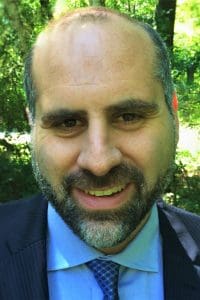 Mike is an Associate Professor at Skidmore College’s Department of Management and Business. His education began with an MBA, shifting to the study of work and employment, including studies of contingent work and platform work, during his doctorate (in sociology) at the University of North Carolina-Chapel Hill. His work is focused on issues at the confluence of technology and labor market outcomes with a specific emphasis on precarious and nonstandard work arrangements. His work is theoretically informed by the sociology of work, and organizations and labor studies. In the previous decade Dunn has worked on five NIH-funded efforts focused on precarious and underserved worker populations (i.e. tribal workers, day laborers, ex-offenders). From 2015-2017, Dunn was a visiting researcher at the Bureau of Labor Statistics. His methodological orientation is primarily qualitative and has field-based research experience with rideshare/transportation, delivery/task, crowdwork, and online freelance platforms.
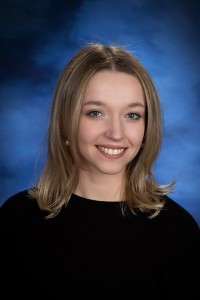 Clea O’Neil is a Ph.D. student at the Syracuse University iSchool. She focuses on how digital labor platforms are reshaping the relationship between organizations and workers. O’Neil is interested in how online workers across occupations manage their platform-mediated identity, strategize to appeal to algorithms, and experience the effects of AI. O’Neil joined the Digital Work Group in September 2021 and graduated from Skidmore College in 2024 with a BA in Business-Political Science. She has since worked as a post-graduate research fellow and project manager within the Digital Work Group before joining the iSchool’s Ph.D. program.

Steve Sawyer
Steve is a professor at Syracuse University’s School of Information Studies. His research focuses on the changing forms of work and organizing enabled through uses of information and communication technologies. This is done through detailed field-based studies of freelance and nomadic workers, scientific collaborators, software developers, real estate agents, police officers, organizational technologists, and other information-intensive work settings. He has also been active in advancing sociotechnical approaches to studying computing collectively known as social informatics. Sawyer’s work is published in a range of venues and supported by funds from the National Science Foundation, IBM and other public and private sponsors. Prior to returning to Syracuse in 2008, Steve was a founding faculty member of the Pennsylvania State University’s College of Information Sciences and Technology. He earned his Doctorate from Boston University in 1995.
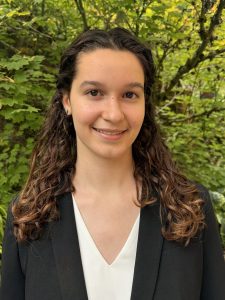 Audrey Hebert is a junior at Skidmore College majoring in Management and Business and completing minors in Sociology and German. She joined the Digital Work Research Team in May 2025. Audrey is interested in exploring how platform constraints influence freelancers’ identity formation and worker-client relationships.
 Clarissa Rachmiel is a junior at Skidmore College majoring in Management and Business, as well as English Literature. She has been a part of the Digital Work Research Team since November 2025. Clarissa is interested in the influence algorithms have on strategies freelancers use to craft identity, as well as their understanding of skills in the age of AI.
Collaborators
Learn more about Lan Li and her work at https://lan-li.net/
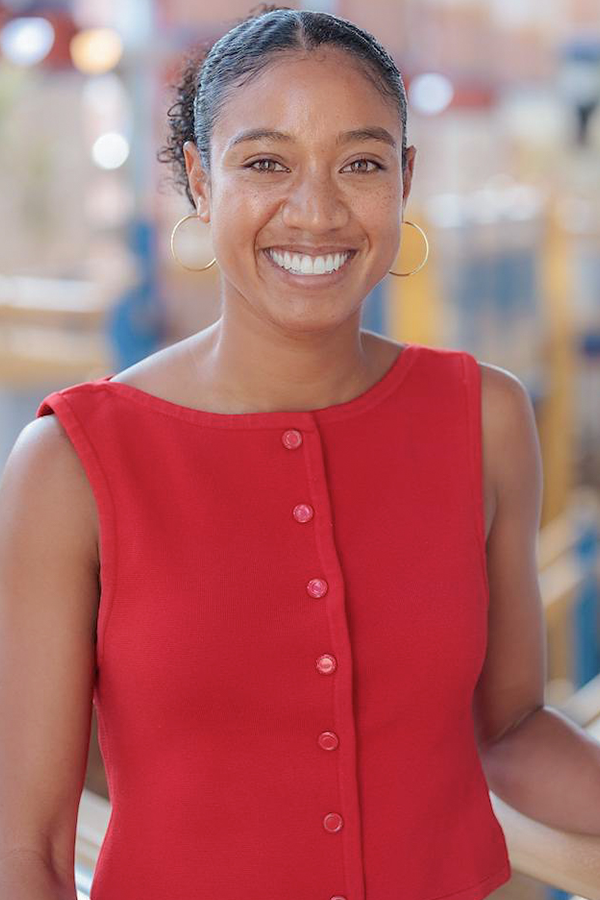 Sienna Helena Parker-Waldern is an Assistant Professor of Information Systems at Cambridge Judge Business School. She earned her PhD in Technology Management from UC Santa Barbara in 2026. Her research examines how digital technologies enable new ways of working and organizing and the opportunities and challenges this present for workers’ careers and livelihoods. Currently, she is investigating the changing nature of later-life careers in the platform workforce. Her work has been published in Administrative Science Quarterly and the Annual Review of Organizational Psychology and Organizational Behavior. You can contact Sienna on LinkedIn: https://www.linkedin.com/in/siennaparker/
Alumni
Robyn Karchere-Sun ’26, LinkedIn
Taylor Lewandowski ’26, LinkedIn
Anastasia Sysoeva ’26, LinkedIn
Patrick Tuyishime ’25, LinkedIn
Heba Salman ’25, LinkedIn
Lauren Coop ’25, LinkedIn
Dr. Pyeonghwa Kim ’26, LinkedIn
Jean-Philippe Rancy ’25, LinkedIn
Bernadette Berner ’24, LinkedIn
Melina Iavarone ’24, LinkedIn
Izabela Krakic ’24, LinkedIn
Ellie Owen ’24, LinkedIn
Dr. Isabel Munoz ’23, LinkedIn
Rebecca Farrell ’23, LinkedIn
Sofia Shore ’24, LinkedIn
Bethanya Philipos ’22, LinkedIn
Brooke Stephenson ’22
Gabby Vaccaro ’22, LinkedIn
Emily Michaels ’22, LinkedIn
Dr. Sarika Sharma ’22
Alaina Caruso ’21, LinkedIn
Bonnie Yu ’21, LinkedIn
Lily Moffly ’21, LinkedIn
Lily Feldman, LinkedIn
Raghav Raheja, LinkedIn
Dr. Sarika Sharma, Website
Haley Weller ’20, LinkedIn
Jean-Philippe Rancy, LinkedIn
Anjelica Torcivia ’18, LinkedIn
Emma Allen ’16, LinkedIn
Dr. Matt Willis ’16, LinkedIn
This work is supported by grants from: Syracuse University’s Office of the Vice President of Research and SOURCE; Skidmore College; and the National Science Foundation (via awards ACI 1346550; IIS 1665386, IIS 2121624, and IIS 2121638).
Any opinions, findings, conclusions and recommendations expressed here are those of the authors and do not necessarily reflect the views of the NSF, Skidmore College or Syracuse University.